
Poll: Americans reject legal rights, ‘personhood’ for AI
A vast majority of Americans reject the idea of giving legal rights and ‘personhood’ to artificial intelligence, according to a new poll.
The Center Square’s Voters Voice Poll, conducted by Noble Predictive Insights, found 77% of registered voters think AI should always be treated as a tool controlled by humans, not an entity to confer legal rights. Only 11% of registered voters said advanced AI systems should eventually be eligible for legal rights or personhood.
As AI systems become more advanced, some argue that they display more “human-like” behaviors such as emotion, intention and moral responsibility, sparking a debate among some scholars.
The poll, conducted from June 1 to June 4, surveyed 2,585 respondents on a wide array of political issues. Among the respondents, 915 are Republicans, 1,013 are Democrats and 297 are true independents, which indicates voters who do not lean toward either major party when asked.
Across political persuasions, voters agreed that AI should not be afforded legal rights or personhood. Only 11% of both Democratic and Republican respondents said artificial intelligence should “eventually be eligible for legal rights and personhood.” About 12% of true independent voters said the same.
Mike Noble, founder of Noble Predictive Insights, said the data show Americans are not comfortable conferring rights to AI. He said the issue is clear across partisan lines.
“For AI to become their own individuals, or get their own rights, or basically be considered humans, that’s not going to happen anytime soon,” Noble told The Center Square.
Overall, about 12% of registered voters said they were “not sure” whether AI should simply be treated as a tool or eventually given legal rights and personhood.
“A lot of people have watched a lot of sci-fi movies, but I don’t think we’re quite there yet,” Noble said, referring to movies such as The Terminator series, A.I.: Artificial Intelligence, Ex Machina, and Her. “We’re not going to be there for a long time.”
Respondents ages 18-29 were most likely to say AI should receive legal rights and personhood. Even still, only 21% of respondents ages 18-29 agreed with the sentiment.
“They’re a long way away from any of that,” Noble said.
Black respondents were also most likely to agree that AI should be given legal rights and personhood at 24%, one of the highest levels across all demographics. About 14% of Black respondents were not sure about legal rights for AI and 62% said it should only be used as a tool controlled by humans.
“The main takeaway is that, it needs to be a tool, it’s not going to be its own thing,” Noble said. “We’re not going to let it run around, do its stuff, we need to have control on this.”





Partly Sunny
Latest News Stories

P&Z Commission Advances Plan for Construction Debris Fill Operation on Brandon Road
Regional Transit Agencies Tout New State Funding, Prepare for Shift to ‘NITA’

Illinois legalizes physician-assisted suicide; critics warn of moral, safety risks
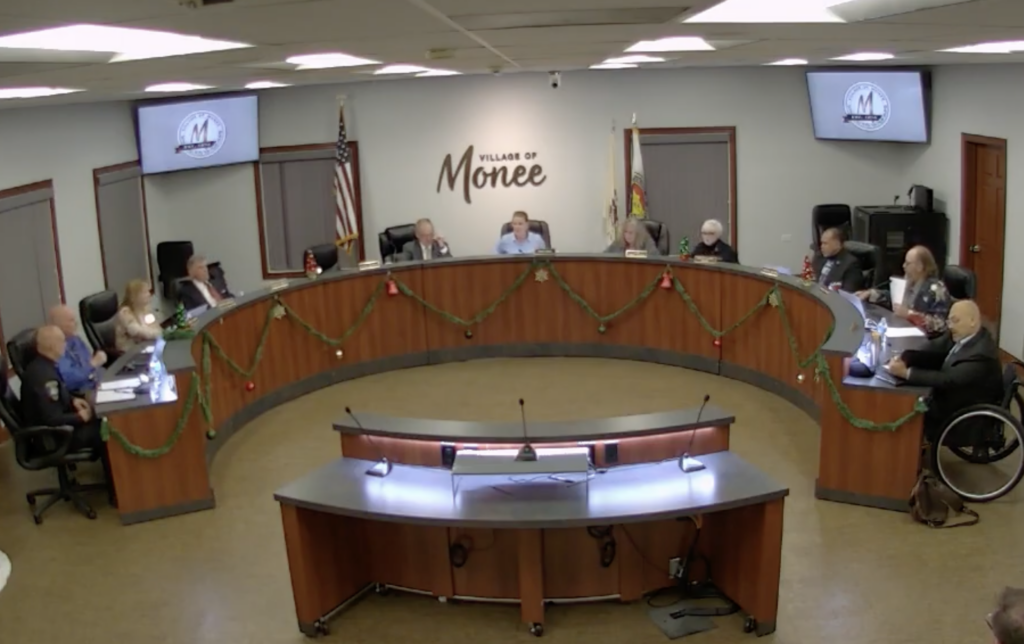
Monee Village Board Approves New Streaming Tax and 2025 Tax Levy

IL Dem touts ‘great job’ on transit, GOP candidate laments ‘bailout’ for Chicago

Bill designed to protect school kids from sexual misconduct

Illinois quick hits: More bills enacted into law; former ComEd CEO seeking Trump pardon

Pritzker enacts bills, including measure decoupling IL from federal tax code

WATCH: California co-leads suit over $100,000 H-1B visa fee

WATCH: Trump outlines AI order, calls Pritzker ‘totally unreasonable’

Entrepreneur’s supporters say case law may result in release

GOP lawmakers silent on Trump’s EO punishing state AI guardrails