
Wisconsin Supreme Court rules against race-based scholarships
A Wisconsin college grant program that sent financial aid to students based on specific race, national origin and ancestry cannot legally operate because it violates the Equal Protection Clause of the 14th Amendment, the Wisconsin Supreme Court ruled Thursday.
The ruling came after a Wisconsin Court of Appeals ruling that attaining diversity in higher education is no longer a compelling interest that allowed for an exception to the Equal Protection Clause. The case was filed by filed by six taxpayers against the Wisconsin Higher Educational Aids Board and Executive Secretary Connie Hutchinson, who was in charge of administering the grants.
The grant program began in 1985 for students attending private and technical colleges in the state who were a minority undergraduate who was a “Black American,” “American Indian,” “Hispanic” or a former citizen of Laos, Vietnam or Cambodia who entered the country in 1976 or later.
Justice Jill Karofsky concurred with the opinion of the court but wrote separately in her opinion, joined by Susan Crawford, on the benefits of the scholarship program.
“Despite this documented success, the grant program’s explicit reliance on race is fatal to its constitutionality for the reasons explained in Justice Dallet’s concurring opinion,” Karofsky wrote. “A suggested alternative means of maintaining a grant program to improve retention would be to target individuals who are economically disadvantaged, since there is also a statistical correlation between economic disadvantage and low retention rates.
“While this alternative aligns with the Supreme Court’s ruling in SFFA, it falls short because it does not acknowledge the racial inequality underlying the problem.”
Sen. Eric Wimberger, R-Gillett, sponsored a bill that would have ended race-based college scholarships in the state but that bill was ultimately vetoed by Gov. Tony Evers.
“Today, the state Supreme Court unanimously affirmed the policy outcome of my bill, Assembly Bill 669, which Governor Evers vetoed and legislative Democrats opposed, to end discriminatory and race-based scholarships in Wisconsin,” Wimberger said in a statement. “Giving benefits based solely on race presumes someone has individual personal characteristics simply because they belong to a race category. That is stereotyping and racism at their plainest and simplest.”





Sunny
Latest News Stories

Crete-Monee 201-U Board Reviews Tentative Budget with Projected $722,000 Deficit

Green Garden Township Moves Forward with New Town Hall Plans, Awaits Grant Approval

Township Board Approves Budget Transfers to Fund Assessor’s Staff and Correct Rent Payment

County Rep Cites Solar Lawsuits, Grant Shortfalls as Key Issues Facing Will County

Assessor’s Office Hires Staff to Handle Workload After 6% Multiplier Hits Property Owners

Township Appoints Temporary FOIA Officer During Trustee’s Leave of Absence

Meeting Summary and Briefs: Green Garden Township Board for August 11, 2025
Will County Health Department Seeks $1 Million to Avert ‘Drastic’ Service Cuts from Expiring Grants
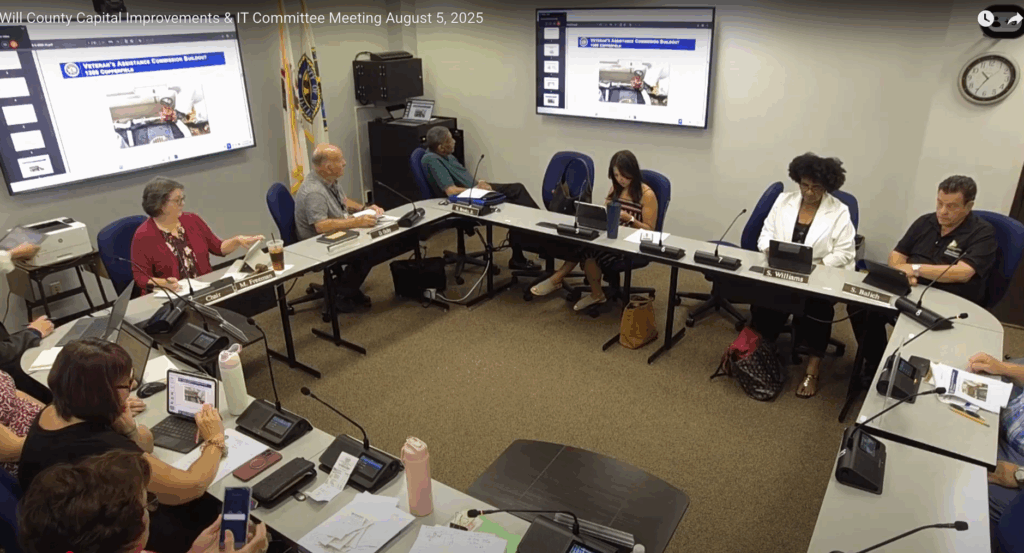
Will County’s “First-in-Nation” Veterans Center to House Workforce Services, Sparking Debate
Improved Vendor Service Creates $1.2 Million Shortfall in Sheriff’s Medical Budget
Will County Public Works Committee Unveils 25-Year Transportation Plan, Projects $258 Million Gap
Will County Animal Protection Services Seeks New Facility Amid “Gaping Wound” of Space Crisis
Board Confronts Animal Services Crowding, Explores Future Facility Options
Will County Board Members Demand Transparency in Cannabis Tax Fund Allocation