Federal judge blocks Trump’s 100K visa fee
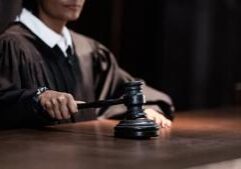
A federal judge in Massachusetts on Monday blocked President Donald Trump’s policy seeking to implement a $100,000 fee on visas for highly skilled foreign workers.
U.S. District Judge Leo Sorokin said Trump’s order imposing a $100,000 fee on H-1B visa recipients is “unlawful.”
On Sept. 19, 2025, Trump signed a proclamation imposing a one-time $100,000 fee on future foreign workers coming to the United States through the H-1B visa. He cited wage suppression and a reduction in jobs for American workers in his proclamation.
“Some employers, using practices now widely adopted by entire sectors, have abused the H-1B statute and its regulations to artificially suppress wages, resulting in a disadvantageous labor market for American citizens,” the proclamation read.
In fiscal 2025, the United States approved 328,185 workers on H-1B visas throughout the country. The H-1B visa is reserved for highly skilled workers, typically in science, technology and engineering fields.
Sorokin said the Trump administration’s policy is an unconstitutional tax on individuals seeking entry into the United States, not an administrative penalty.
“The $100,000 payment requirement amounts to a tax, not a penalty,” Sorokin said.
Sorokin pointed to the the U.S. Supreme Court’s decision to classify Trump’s tariff policies as a tax on the American people to support his ruling.
Lawyers for the Trump administration argued the visa fee could not be considered a tax because it did not have the express purpose of raising revenue for the federal government. Sorokin was not convinced.
“An obvious purpose of the Policy is to raise revenue – it charges a substantial fee for all H-1B petitions,” Sorokin wrote. “Every $100,000 payment made pursuant to the Policy does raise revenue. That is indisputable.”
Before implementation of the policy, fees associated with the H-1B visa included a $500 fraud prevention fee and $1,500 filing fee.
Employment immigration lawyers have expressed mixed opinions on the Trump administration’s H-1B visa fee. Shev Dalal Dheini, senior director of government relations at the American Immigration Lawyers Association, said the policy appeared to be unconstitutional.
“This is a coordinated attack on U.S. innovation,” Dalal Dheini said. “Making it more difficult for the best and brightest to come to the United States and stay here and continue contributing to the United States.”
Nathan Mondragon, chief information officer at HireVue, said he hoped the Trump administration’s policy would expand opportunities for American citizen workers.
“When employers clearly define the skills that matter most, they can expand their candidate pools by looking beyond traditional degree requirements, tap into overlooked U.S. talent, and invest in internal development programs,” Mondragon said.
Lawyers for the Trump administration are expected to appeal Sorokin’s decision.

Sunny
Latest News Stories

Public Health Committee Chair Demands Animal Control Agreements for Crete, Monee
Public Works Committee Considers Taking Over Kankakee County Line Road to Expedite Bridge Repairs
Trump signs order protecting Venezuelan oil revenue from legal claims
Retirements and resignations to impact midterms as balance of power at stake
Peotone Man Charged With Disorderly Conduct, Criminal Damage at New Lenox Target
U.S. Supreme Court to hear anti-oil cases with energy costs on the line
Constitutional concerns raised over Illinois’ first civil hate crime case
Executive Committee: Update to Land Resource Management Plan; Solar Farms and Rural Zoning Dominate Discussion
Will County Committee Adds Path to Citizenship Support to Federal Agenda
Health Department Outlines Major Reduction in Consensus Vaccine Schedule
Public Works Committee Forwards Condemnation Proceedings for Francis and Marley Road Improvements
Finance Committee: Scholarship Tax Credit Discussion Halts