Fewer businesses of Illinois’ diversity-preferred group got state contracts last year
(The Center Square) – Fewer businesses that get diversity-related government priority in Illinois are getting contracts with the state, according to a new annual report from the agency, after a long-running computer problem thwarted efforts to increase those contracts.
About 1,500 businesses that are owned by racial minorities, women and people with disabilities were paid by the state for construction and other service contracts in this past fiscal year.
That figure — contained in the Illinois Commission on Equity and Inclusion’s recent annual report — is a 9-percent decrease from the prior year. And it happened even though state lawmakers have devoted millions of dollars in recent years to support the businesses.
Lawmakers created the commission in 2022 and pay each of its seven governor-appointed commissioners about $150,000 annually. They also have a staff of about 30. The Center Square has found that the commissioners meet less frequently and are paid more than other state board members, take no votes of consequence, and that some work side jobs for pay.
Further, they oversaw a switch to a new computer system that for more than a year has reduced the number of the businesses that get help navigating the state’s contracting processes and are prioritized for contract awards.
One of the commission’s primary tasks is to increase the number of businesses that are certified as majority-owned by people from groups the state has deemed to be disadvantaged.
Yet, that number has plummeted. The annual report noted a total of 2,869 certified businesses at the end of the 2025 fiscal year, in June. That is roughly half of its peak and is less than when the commission formed.
Despite the precipitous decrease in certifications, the commission noted an increase in the total dollars spent with the remaining businesses for the past fiscal year, which was about $1.6 billion. But the money went to fewer businesses.
“While the number of diverse contracts dipped from the prior year, the report shows meaningful progress in where the dollars are going,” the commission’s executive director, Alexandria Wilson, said in a recent meeting.
She noted high contract amounts for architectural, engineering and computer services.
Overall goal reduced
State leaders have sought to award between 20% and 30% state contract money to the certified businesses.
The commission reported significant progress toward those percentage goals for the last fiscal year, but it was largely driven by a massive reduction in the money that is subject to the goals.
While the state’s total spending eclipses $100 billion each year, the commission determined that only about $15 billion of last year’s spending should be measured for compliance.
Contracts can be exempted from the goals if the pool of certified businesses that might compete for them is too small.
The total eligible money — known as the “dollars subject to goal” — for 2025 was less than half of the total for 2024. Consequently, the percentages used to track progress more than doubled.
The commission reported that about 11% of eligible money was spent with certified businesses in 2025, up from about 4% in 2024.
The commission’s annual report does not specifically address why the total dollars subject to goal decreased so dramatically for 2025. It noted that the commission used a “revised formula” to differentiate between construction and non-construction projects, which have different goals under state law. And the commission also required each agency to input the data into a form to calculate the figures, which was a change from last year’s procedure.
Wilson, the executive director, did not respond to a request from The Center Square to explain how the formula changed and how the change might have affected the goals.
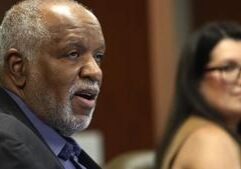
In a recent meeting, Commissioner Bruce Montgomery described the reduction as “a tremendous improvement in the area of dollars subject to goal. That is a win for this community.”
He did not respond to a request to clarify why he considers the large reduction to be an improvement. None of the commissioners have responded to The Center Square’s interview requests in recent months.
Funding for the commission is expected to be the subject of a state Senate committee hearing on Wednesday. Lawmakers have proposed about $5.6 million for the commission for the next fiscal year.






Sunny
Latest News Stories

Allstate can’t delete class action over alleged secret app tracking

Chicago voters view housing affordability as bigger issue than crime
New Illinois gun bill aims at glock switches; critics say it misses the real problem
Illinois quick hits: Cook County spends nearly $20 million on food, housing services; Chicago Teachers Union tells teachers, students to skip school; Russell Dickerson to play Du Quoin State Fair

Will County Officials Warn of Zoom Court Scam Targeting Defendants for Fraudulent Dismissal Fees

Illinois quick hits: Services Saturday for teen killed by line drive
Critics concerned seizure detection bill impacts Illinois’ small businesses
CTA security enhancement plan follows federal push, complaints
Lawyers who specialize in suing Chicago cops seek special prosecutor to go after ICE
Will Land Use Committee Evaluates Multi-Million Dollar Buyout for Flooded Harris Drive Homes
Behavioral Health Division Drops Wait Times, Reports Zero Opioid Deaths in February
Harris Drive Residents Plead for County Intervention Amid Failing Septic Systems and Flooding
Will County Sheriff’s Office Investigates Fatal Hit-and-Run in Homer Glen