
Advocates call for repeal of FACE Act over unequal enforcement concerns
After anti-ICE protests erupted in Minnesota, legal advocates are calling for reversal of the FACE Act, a law that levies penalties for interference at abortion clinics and houses of worship.
In 1994, Congress passed the Free Access to Clinic Entrances, or FACE, Act which subjects individuals to penalties who attempt to intimidate, injure or interfere with access to reproductive health services, including abortion. The act also levies penalties against individuals who interfere with houses of worship.
Jeremy Dys, senior counsel for First Liberty Institute, said the FACE Act has historically not been used to pursue incidents at houses of worship. However, an anti-ICE protest at a church in St. Paul, Minnesota, and several other incidents, have brought the law into special consideration.
On Jan. 18, a group of anti-ICE protestors disrupted a church service in St. Paul, Minnesota, over ongoing anti-ICE activities in the state. Former CNN reporter Don Lemon was present at the event, reporting on activities. Video showed Lemon working with the activists.
Lemon has since been charged by the U.S. Department of Justice for his involvement in the protest.
Matthew Cavedon, director of the Project for Criminal Justice at the CATO Institute, said the FACE act is unnecessarily restrictive and goes beyond the enumerated powers of Congress.
“I am skeptical just at a gut level that there is enough of a breakdown in law and order at the state level here that people are routinely disrupting religious services with total impunity from the states to justify this becoming a federal crime,” Cavedon said.
Erin Hawley, counsel at the Alliance Defending Freedom, said the FACE Act has been used to aggressively pursue pro-life advocates demonstrating outside abortion facilities. She said the federal government should not be responsible for determining outcomes of pro-life advocates.
She mentioned an example of an 89-year-old woman who could face up to 11 years in prison for sitting in the doorway of an abortion clinic, which would violate the FACE Act.
“The historic pattern of using that statute to enforce it in a one-sided way I think is something that should give us all pause,” Hawley said.
Dys agreed with Halwey and Cavedon but said that he doubts whether Democrat attorneys general like Minnesota’s Keith Ellison or California’s Rob Bonta would pursue charges against protestors inside houses of worship.
“These attorneys general have turned a blind eye against the law,” Dys said. “They have taken off the blindfold of justice and decided to put their finger on the scale instead on behalf of their political friends.”
Hawley warned that the application of the FACE Act could bring about radically different levels of justice depending on the political ambitions of a particular administration. She said a Republican administration could pursue religious service protestors and a Democratic administration could pursue pro-life advocates. Over the course of four years, the Biden administration charged 24 individuals with FACE Act violations, 22 of which were pro-life advocates, according to federal data.
“I think the FACE Act is on thin ice,” Hawley said. “If it’s going to be enforced, it should 100% be enforced equally but we have not seen that at least as a matter of historical practice.”
As the Trump administration prepares to legally pursue protestors at houses of worship, advocates have warned it must be careful to not engage in the same kinds of federal overreach as prior administrations did.
Advocates called for Congress or the U.S. Supreme Court to overturn the FACE Act and apply stricter scrutiny on individuals who disrupt houses of worship.
“The equal protection clause says that every person is entitled to the equal protection of the laws,” Cavedon said. “I would overturn [the FACE Act] and have there be more robust federal protection for individual rights when states fail to provide them.”




Mostly Sunny
Latest News Stories

Illinois bill sparks debate over police privacy vs. public access

Signature process begins to ban large data centers in Ohio

U.S. Supreme Court agrees to hear veteran’s benefits challenge
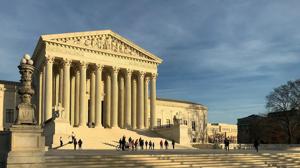
Supreme Court declines to hear challenge to Illinois public transport gun ban

Illinois Quick Hits: Report says Pekin Bowling Center ‘taxed out of business’
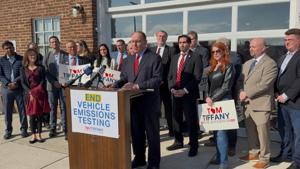
Tiffany vows to end subsidies for data centers in Wisconsin

Meeting Summary and Briefs: Crete-Monee School District 201-U for March 10, 2026

Meeting Summary and Briefs: Monee Village Board of Trustees for March 25, 2026

Monee Township Reports Over $4,200 in General Assistance, Highlights Community Programs

Firefighter age bill stalled despite union backing

County Board Members Pitch “Granny Flats,” Hobby Farm Zoning, and Farmland Mitigation in LRMP Brainstorm

Financing Fails for MEC Property Buyer, Board Weighs Keeping Earnest Money