Judge permits cameras for next Tyler Robinson hearing
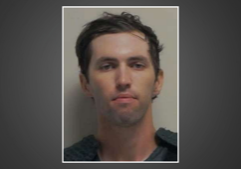
A Utah County judge on Friday ruled cameras will be allowed in the courtroom at the April 17 hearing for Tyler James Robinson, the 22-year-old man accused of killing conservative leader and Arizona resident Charlie Kirk.
During a pretrial hearing in a Provo, Utah courtroom, Fourth Judicial District Court Judge Tony Graf Jr. ruled against Robinson’s lawyers’ motions to exclude cameras during the April 17 hearing and limit public access to certain documents in the case. The ruling means video and still cameras and microphones will be allowed at the hearing.
“In balance, the defendant has not provided a sufficient basis for the court to find that the interests favoring closure outweigh the interest favoring an open proceeding and the presumptive right to access,” Graf said during the hearing, which was broadcast live on Utah TV stations and their websites. A still photographer and videographer were in the courtroom, as they have been at other hearings.
Graf added he may close certain portions of the April 17 hearing. He said defense lawyers had until March 30 to file a motion requesting which segments of the hearing would be closed.
Robinson is charged with seven counts, six of which are felonies. They include aggravated murder and multiple counts of witness tampering and obstruction of justice. Utah County Attorney Jeff Gray has said he will seek the death penalty if Robinson is convicted of murder. Robinson is accused of killing Kirk, who cofounded Phoenix-based Turning Point USA, during a rally Sept. 10 at Utah Valley University in Orem, Utah.
Earlier during Friday’s hearing, Robinson’s attorneys argued there was a great deal of prejudicial and inaccurate pretrial publicity that would hurt Robinson’s chances to get an impartial jury and endanger his constitutional right to a fair trial.
But prosecutors countered that information that had already been made public can’t suddenly be classified as private.
And Graf noted Robinson’s rights to a fair trial can be protected by procedures such as voir dire, the process in which attorneys interview prospective jurors; the expansion of the jury pool; and questionnaires for potential jurors.
In arguing against cameras and limiting public access to documents, defense attorney Michael Burt said Robinson’s lawyers are seeking to prevent the “kinds of prejudicial pretrial publicity that has characterized this case so far.”
Burt added he and the rest of the defense team were trying to avoid creating further prejudicial publicity by seeking a closed hearing to make their motions.
And he cited a 1965 case, Estes v. Texas, in which the U.S. Supreme Court ruled 5-4 that televising a courtroom proceeding over a defendant’s objection violates the constitutional right to a fair trial.
But Graf immediately referred Burt to Chandler v. Florida. In the 1981 case, the U.S. Supreme Court ruled the presence of cameras was not inherently prejudicial to a defendant’s right to a fair trial.
“You cite Estes, but Estes was overruled by Chandler,” Graf told Burt.
The lawyer later conceded that Chandler puts the burden of proof of prejudicial publicity on the defense.
Burt also cited Kearns-Tribune Corp. v. Salt Lake County Commission, a 2001 case in which the Utah Supreme Court ruled in favor of the commission going into a closed session to discuss an annexation.
“We don’t have to show a clear and present danger (to a fair trial), but a likelihood of prejudice,” Burt said.
Prosecutors told Graf that defense lawyers were not giving specific reasons for their motion to limit public access to documents.
“A general allegation that it discusses evidence that might be inadmissible is not enough to deny public access,” prosecutor Christopher Ballard argued. Ballard added he and the other prosecutors are not representing the media and noted that both defense and prosecution have seen media reports unfavorable to their side.
“To say this is a content tornado, with a barrage of media coverage, doesn’t necessarily mean there’s going to be prejudice against the defendant,” Ballard said.
Showers And Thunderstorms Likely
Latest News Stories

DOT realizes road safety a concern with marijuana rescheduling

Meeting Summary and Briefs: Will County Board for December 18, 2025
2025 illegal entries in Texas: Nearly half the gotaways reported in previous years

Nashville speaker maker plans to move overseas to avoid tariffs
Supreme Court could redefine 14th Amendment application
Missouri year in review: capital gains eliminated, Medicaid increased
2025 in review: Historic border security actions taken by Trump

Free speech under fire nearly 300 times in 2025 on campus

IL rep: As if Bears ‘had a plan to rob the bank’ before considering Indiana

Meeting Summary and Briefs: Crete-Monee Board of Education for December 16, 2025

Undersheriff Brian Conser Retires After 29 Years of Service
FBI to scrap $5 billion move, Patel says