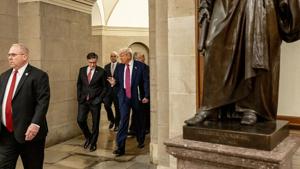
WATCH: Dell Federal Symposium on AI improving work efficiency
Dell Technologies held a symposium Thursday to discuss Federal integration of advanced technologies, such as AI and quantum computing, into government missions.
Dell Technologies showcased innovative AI-driven technology designed to improve federal agency services and better serve the American people.
Suri Durvasula, vice president of Federal Dell Technologies, expressed a desire to see the U.S. government use AI to help with health care, citizen services and national security.
“Until we get that innovation to happen within the government, we can’t deliver that for our citizens,” Durvasula said. “That’s what the Department of Energy is doing, aligned with the Genesis mission and the program that’s being put together.”
Durvasula interviewed Michael Dell, chairman of the board and chief executive officer of Dell Technologies, and Dr. Darío Gíl, under secretary for science for the U.S. Department of Energy, in a panel to explain further AI innovation.
“We are seeking to revolutionize how science and engineering are practiced in our nation,” Gíl said. “Today we spend a trillion dollars a year, as a nation, doing research and development, and we believe that it is possible to double the productivity and impact of that trillion a year within a decade.”
“The pace of acceleration and improvement and progress is not slowing down, and I think ideas and concepts are moving into production faster than ever,” Dell said. “And certainly all of this is amplifying human capability and judgment and accelerating progress.”
After seeing a decline in American interest in science and engineering programs, Gíl described an initiative to rekindle interest by allowing students to dual study bachelor’s and doctorate rather than merely bachelor’s and master’s degrees, as well as providing internship opportunities.
“So from bachelor’s to doctorate in seven years,” Gíl said.
According to John Roese, Dell’s chief technology officer and chief AI officer, AI is meant to assist in speeding up production and complete tasks, but will also create jobs and redefine job descriptions due to real people needing to run the AI program.
Roese explained the difference between types of jobs meant strictly for a human-centric workforce, such as decision making and managing roles, and which jobs could be assigned to AI, such as repetitive tasks and behind-the-scenes work.
“Very simply put, every task in our company has three parts to it; intent, action and validation. What we know is intent and validation are distinctly human jobs,” Roese said. “There is no one who would be comfortable assuming an AI can deliver an outcome, any sanity check, without any validation by a human being, especially impacts with humanity. That’s a distinctly human job.”
Dell Technologies intends to continue partnering with federal agencies to develop and enhance AI technology to improve efficiency. Dell Technologies will be hosting a Dell Tech Day in Las Vegas in May.





Showers And Thunderstorms then Mostly Cloudy
Latest News Stories

WATCH: Pritzker says Trump’s first year a failure; Raoul discusses prosecuting fraud

Illinois Quick Hits: Pritzker wants year-round E15 fuel
Report: University diplomas losing value to GenAI

Sanctuary Status Threatens Emergency Management Funding, Draft Report Warns

WATCH: Reclaiming the Panama Canal could be back on the table

Las Vegas tourism industry continues to decline

More states now offer school choice programs for families
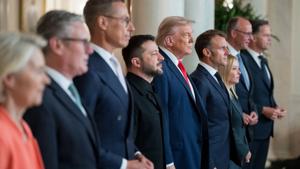
Trump likely to make waves at biggest-ever World Economic Forum
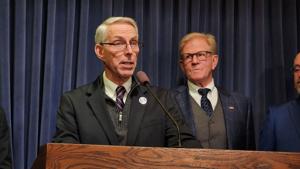
Illinois House returns to session with plans for SAFE-T Act, Israel, taxes

Illinois quick hits: Bovino bounty trial to begin; Judge sentences Kentucky man to 15 years in drugs case; Pritzker criticizes Trump’s first year as Trump marks accomplishments
IL AG reviews battles vs. Trump administration: ‘365 days of chaos’
Largest U.S. band manufacturer plans to leave Ohio, send some production overseas