Gas prices climb in U.S., Southwest during war with Iran
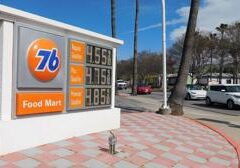
The U.S. and Israeli war with Iran has already inflated prices at the gas pump for people across the Southwest and the rest of America.
But experts say the biggest hikes could be yet to come.
The war, which started this past weekend and reportedly has killed over 1,000 people (including six U.S. service members), has pushed gas prices up by an average of 21 cents across the U.S. since last week.
“The last time we saw something similar to this was when Russia invaded Ukraine,” AAA Mountain West Group Spokesperson John Treanor told The Center Square.
Another spokesperson stressed the war’s impact at the pumps.
“This war in Iran has definitely caused oil prices to go up quite a bit in the last week,” AAA Mountain West Group Spokesperson Julian Paredes told The Center Square. “ Twenty cents going up in a week is pretty extreme.”
While minor gas price increases are typical in the spring, AAA experts said the difference over the past week can’t be accounted for by this seasonal difference.
“It’s typical to see gas prices go up a little bit because people are driving more as the weather gets nicer, and we switch over to what’s called the summer-blend gasoline, which is a more expensive form of gasoline,” Treanor said.
Oil refineries make summer-blend gas that has more expensive additives to prevent evaporation during the heat, according to AAA.
“What does not typically happen are large jumps like this due to extenuating circumstances, historical events,” Treanor said. He added that seasonal changes normally account for a couple of cents per gallon.
As of Wednesday, the U.S. average price for a gallon of regular gas was $3.20, up 22 cents from last week’s $2.98, AAA reported.
In Arizona, the average price for a regular gallon on Wednesday was $3.49, up from last week’s $3.27. California, with the most expensive gas in the country, was up to $4.74 from $4.63. Colorado was at $3.11 from $2.90, and Nevadans were seeing an average of $3.83 at the pumps, up from $3.70 last week.
“This war with Iran impacts us in Arizona,” said Paredes.
Elsewhere in the U.S., average gas prices on Wednesday were $4.41 a gallon in Washington state, up from $4.36 a week ago; $3.32 in Illinois, which is an increase from $3.03 one week ago; and $2.817 in one of the states with the lowest prices, Texas, up from $2.61 a week ago.
The U.S. does not buy oil or gas from Iran, but experts say the sharp price increases over the past week have come from market speculation and the expected tightened global supply.
At the same time, the war in Iran could stretch on longer, with President Donald Trump on Sunday saying it could last four to five weeks.
“We haven’t yet seen the limits in supply affect the market, but it will if there’s a prolonged closure of the Strait of Hormuz,” said Auto Club Group Spokesperson Skyler McKinley in Colorado. “I think we’re still about a week out from the increase in the per-barrel cost affecting what consumers are paying at the pump.”
The strait is a narrow stretch of sea alongside Iran before the Persian Gulf, which saw around 20% of global petroleum liquids pass through in 2024, according to the U.S. Energy Information Administration.
Parades noted the war and its impact are unpredictable. “It really depends on how long it lasts and how far it escalates, and the scary thing is we don’t know.”
The AAA experts offered a variety of tips on how to minimize wallet damage as consumers.
“There’s a world where we’re paying north of $3.50 during the summer – we could be paying north of $4 – but it’s impossible to speculate when that’s going to happen, or if it’s going to happen, because it’s not really up to the market,” said McKinley, who stressed the need to budget for potential price increases. “It’s up to all of these broader questions. There’s such a temptation to say, ‘This is going on; therefore, this will happen at the pump,’ but it’s just way more complicated than that.”
The little details that impact mileage are worth noting as well, according to Paredes in Arizona.
“Keeping it [your car] properly maintained, sticking to the speed limit, even just making sure your tires are properly inflated,” he said. “Flat tires or under-inflated tires can really hurt your fuel economy. You can’t really control gas prices, but you can make sure you’re getting the most for what you’re paying for.”
In Nevada, Treanor reminded drivers that sharp price increases at the pump were unfortunately nothing new.
“When Russia invaded Ukraine, demand went up, supply went down, and we became very smart consumers,” said Treanor. “You started using apps that told you where the cheaper gas was in your area. You carpooled. You changed the way you drove. You became more efficient drivers. Those kinds of things should still ring true. You can find ways to stretch that so you don’t have to fill up as much.”






Sunny
Latest News Stories

WATCH: Dell Federal Symposium on AI improving work efficiency

NIH plots investments in women’s health

Pritzker: ‘God was looking out for people’ in storm-damaged Kankakee County

Illinois Quick Hits: Correctional officer charged with sexual misconduct

24 AGs question funding of orgs refusing to remove climate agenda from judges manuals

Costco faces lawsuit as consumers seek refunds from invalid tariffs

Insurer won’t back Gori defense vs asbestos lawsuit fraud claims

With teachers union support, committee approves charter school mandates

Allstate can’t delete class action over alleged secret app tracking

Chicago voters view housing affordability as bigger issue than crime

New Illinois gun bill aims at glock switches; critics say it misses the real problem

Illinois quick hits: Cook County spends nearly $20 million on food, housing services; Chicago Teachers Union tells teachers, students to skip school; Russell Dickerson to play Du Quoin State Fair