Supreme Court strikes down court error in baby food case
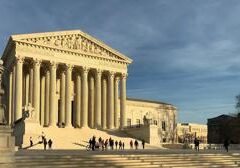
The U.S. Supreme Court, in a unanimous decision, struck down a lower court’s decision preventing parents from suing a baby food manufacturer over tainted products.
The case, Hain Celestial Group v. Palmquist, centers around parents in Texas who fed their child baby food from Whole Foods Market. Later, their child was diagnosed with mental and physical conditions resulting from heavy-metal poisoning.
A report later found that baby foods, including Hain’s, contained elevated levels of toxic metals. Sarah and Grant Palmquist, the Texas parents, sued Hain and Whole Foods in state court.
Hain, a company based in Delaware, removed the case to federal court. U.S. law allows federal courts to handle disputes likely exceeding $75,000 in damages when it is between entities in different states. However, Whole Foods was based in Texas and gave the Palmquist’s standing to keep the lawsuit in state court.
“The Palmquists exercised their right to choose a state forum by purposefully and properly joining a nondiverse defendant against whom they could not proceed in federal court, and diligently asserted that right by promptly moving to remand the case to state court,” Justice Sonia Sotomayor wrote in the court’s opinion.
Justice Clarence Thomas filed a concurring opinion in support of Sotomayor’s opinion. He pointed to the court’s historical interpretation of claims in state and federal courts.
“This Court has always interpreted §1332(a)’s language ‘to require ‘complete diversity,’ meaning that a federal court can exercise jurisdiction only if no plaintiff shares state citizenship with any defendant,” Thomas wrote.
Thomas also called on the high court to revisit the ‘improper-joinder doctrine,’ which allows federal courts to disregard the citizenship of plaintiffs in cases where there is a lack of diversity.
“Federal courts sitting in diversity likely cannot dismiss nondiverse parties based on their view of the merits of the claims against those parties,” Thomas wrote. “Doing so appears unfaithful to Congress’s limits on our diversity jurisdiction and inconsistent with this Court’s precedents.”
If the court were to revisit this precedent, it could fundamentally alter high profile lawsuits across state lines. This could put national companies at risk for large financial burdens similar to this baby food case.





Sunny
Latest News Stories

WATCH: Dell Federal Symposium on AI improving work efficiency
NIH plots investments in women’s health

Pritzker: ‘God was looking out for people’ in storm-damaged Kankakee County

Illinois Quick Hits: Correctional officer charged with sexual misconduct

24 AGs question funding of orgs refusing to remove climate agenda from judges manuals

Costco faces lawsuit as consumers seek refunds from invalid tariffs

Insurer won’t back Gori defense vs asbestos lawsuit fraud claims

With teachers union support, committee approves charter school mandates

Allstate can’t delete class action over alleged secret app tracking

Chicago voters view housing affordability as bigger issue than crime

New Illinois gun bill aims at glock switches; critics say it misses the real problem

Illinois quick hits: Cook County spends nearly $20 million on food, housing services; Chicago Teachers Union tells teachers, students to skip school; Russell Dickerson to play Du Quoin State Fair