
Supreme Court halts mail delivery lawsuit
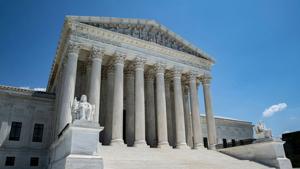
The U.S. Supreme Court, in a 5-4 decision, upheld a law that shields the United States Postal Service from liability when mail is intentionally not delivered.
The case, USPS v. Konan, centers around a Texas woman who sued the U.S. Postal Service for allegedly withholding her mail and interfering with its delivery. Lebene Konan cited the Federal Tort Claims Act, a law that allows U.S. citizens to sue the federal government for negligent or wrongful acts of federal employees.
However, the Federal Tort Claims Act contains several exceptions. The postal exception, relevant in this case, gives the United States immunity from “all claims arising out of the loss, miscarriage, or negligent transmission of letters or postal matters.”
“The Court declines to limit ‘miscarriage’ to negligent failures, as no dictionaries cited impose this limitation, and ordinary speakers used ‘miscarriage’ to refer to problems with mail caused by intentional misconduct, such as when mail was stolen or burned,” Justice Clarence Thomas wrote.
Thomas and Justices Brett Kavanaugh, Amy Coney Barrett, Samuel Alito and Chief Justice John Roberts made up the majority of the court. Justices Sonia Sotomayor, Ketanji Brown Jackson, Elena Kagan and Neil Gorsuch dissented.
Sotomayor, who wrote the court’s dissenting opinion, cited claims of racism Konan made during the court hearing as to why her mail was not delivered by the USPS. She called on Congress to give the postal service a general exception from lawsuits like this in the future.
“Ultimately, this regime is the consequence of Congress’s choice to have the exception turn on certain types of misconduct, rather than providing the Postal Service with a blanket exception,” Sotomayor wrote. “It is not the role of the Judiciary to supplant the choice Congress made because it would have chosen differently.”
However, the majority led by Thomas argued that Konan did not provide the proper information to the post office without for the mail to be delivered.
“When Congress enacted the FTCA in 1946, the ‘miscarriage’ of mail ordinarily included any failure of mail to properly arrive at its intended destination,” Thomas wrote. “Konan would limit ‘miscarriage’ to unintentional failures or failures where the mail went to the wrong address. Neither limitation is well founded.”






Slight Chance Rain Showers then Slight Chance Showers And Thunderstorms
Latest News Stories

Trump hosts small business owners at White House, touting business-friendly policies
DeSantis signs new congressional map into law

South Carolinian facing charges for threatening Trump will stay jailed

Iran testing fragile ceasefire, fires on Navy, commercial ships

Small businesses expected to feel pinch as diesel hits $6 a gallon
GOP senators renew calls to nuke filibuster after voter ID bill languishes

Illinois Quick Hits: Four charged in alleged pharmacy burglary conspiracy

LA City Council member seeks to allow noncitizens to vote

Chicago loses 2,100 restaurant jobs as industry fights mandated wage hikes

State Senator, ‘angel parent’ want to let police work with ICE
U.S. Supreme Court temporarily allows mail-order abortion pills

U.S. Supreme Court declines to hear Washington COVID-19 speech case