Vermont EV buses prove unreliable for transportation this winter
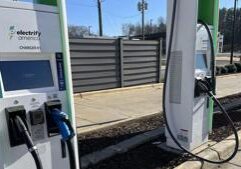
Electric buses are proving unreliable this winter for Vermont’s Green Mountain Transit, as it needs to be over 41 degrees for the buses to charge, but due to a battery recall the buses are a fire hazard and can’t be charged in a garage.
Spokesman for energy workers advocacy group Power the Future Larry Behrens told the Center Square: “Taxpayers were sold an $8 million ‘solution’ that can’t operate in cold weather when the home for these buses is in New England.”
“We’re beyond the point where this looks like incompetence and starts to smell like fraud,” Behrens said.
“When government rushes money out the door to satisfy green mandates, basic questions about performance, safety, and value for taxpayers are always pushed aside,” Behrens said. “Americans deserve to know who approved this purchase and why the red flags were ignored.”
General manager at Green Mountain Transit (GMT) Clayton Clark told The Center Square that “the federal government provides public transit agencies with new buses through a competitive grant application process, and success is not a given.”
“From 2020-2024, the [Federal Transit Administration’s] priority for grants had been low or no emission vehicles, with grant requests for diesel buses often not awarded,” Clark said.
“This was part of a concerted effort of the previous administration to accelerate public transits’ migration to replace diesel buses,” Clark said.
“To be competitive for a grant, GMT…saw electric battery buses as the pathway to get the most new buses,” Clark said. “Green Mountain Transit’s priority is new buses, regardless of the type.”
Clark informed The Center Square that GMT’s “electric battery buses are 90% paid for by federal and Volkswagen settlement funds.”
GMT received five New Flyer SE40 city buses in spring 2025, these buses being a part of “a three year grant cycle for 19 total electric battery buses,” Clark said.
“In September 2025 we ordered 7 additional buses with a 2027 delivery date (but will be delivered with different batteries [than the recalled ones]), and 7 more slated for delivery in 2028,” Clark said. “This is the primary source of new buses for the next three years, as we have only 3 diesel buses anticipated.”
“Canceling the federal grant for electric bus purchases would result in us losing the grant funds,” Clark said. “It would not give us an opportunity to use the funds differently.”
“We will work with FTA to see if the grant can be modified for year 3 since those buses haven’t yet been ordered,” Clark said.
Clark also explained that the five electric buses were “operating well” until November 2025 when the batteries “were recalled for fire hazard.”
The recall prompted a software update from New Flyer to “decrease the likelihood for fire” that “included only allowing the bus to charge to 75% and to not allow charging when the battery is below 41 degrees,” Clark explained.
“Previously we could charge in any temperature to 100%,” Clark said.
As GMT’s bus garage “does not have suitable fire mitigation equipment to store or charge an electric bus indoors at this time,” the transportation system is unable to use its electric buses when temperatures hit below 41.
“Since the barrier to charging under 41 degrees is simply a software update, the manufacturer could find a technical solution that could resolve the problem this week,” Clark said. “We are seeking a financial remedy from New Flyer that could lead to litigation if not resolved.”
“New Flyer has indicated that replacement batteries will be installed within 18-24 months,” Clark said.
Clark also noted GMT is working on improving its fire mitigation equipment via a “pending federal grant.”
Policy analyst at the Institute for Energy Research William Rampe told The Center Square that: “The failure of Green Mountain Transit’s EV buses further highlights the problems with investing in electric vehicle fleets without considering the conditions and infrastructure they need to operate.”
“In Vermont’s case, the cold temperatures of the winter months, alongside the risk of EV batteries catching on fire, make their new bus fleet unusable, putting the level of service GMT provides at risk,” Rampe said.
“This failure adds costs to taxpayers, either by requiring GMT to invest in adequate replacements or by forcing its riders to find alternate means of transportation, which could be especially difficult for low-income riders,” Rampe said.
Rampe told The Center Square that he and those at the Institute for Energy Research “do not believe EVs are reliable in most situations, as the failure of these buses shows.”
“EVs may work fine for drivers who have easy access to charging infrastructure and don’t drive long distances, but for most Americans, limited charging infrastructure, high costs, faster rates of depreciation, and limited range make them an inferior product compared to gas-powered vehicles,” Rampe said.
Rampe also noted that the idea that electric buses are “sustainable” is a failing point “because EVs’ heavier weight and faster acceleration increase particulate emissions from tire wear.”
Senator Bernie Sanders’ media relations has not yet responded to The Center Square’s two requests for comment.




Chance Showers And Thunderstorms then Slight Chance Showers And Thunderstorms
Latest News Stories

Will County P&Z: Washington Township Lot Variance Granted
Will County P&Z Approves Crete Solar Farm, Overruling Township’s General Opposition
Will County Board Approves Controversial Recovery Retreat in Crete Township Amid Strong Resident Opposition
Will County P&Z: Green Garden Township Variances Granted in Monee
Will County P&Z: Manhattan Township Rezoning Approved
Will County P&Z: Green Garden Township Rezoning Approved Amid Concerns Over Lack of a Final Plan

Zoning Commission Overrules Staff, Approves Greeen Garden Twp Variance for 3-Acre Agricultural Lot
Monee Township Board Authorizes $300,000 Loan for Food Pantry Construction
Monee Acquires Properties, Postpones Governor’s Highway Bid

Meeting Summary and Briefs: Will County Board Executive Committee for August 14, 2025
Peotone Schools Face ‘Fiscal Cliff,’ Board Considers School Closures and New Construction
Committee of the Whole Eyes School Closures and New Construction Amid Budget Crisis