Emissions permitted? ‘Irrelevant’ vs lawsuits: IL Sup Ct
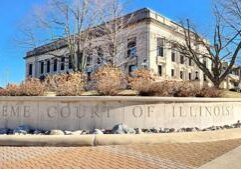
Businesses in Illinois hit by blizzards of potentially ruinous lawsuits over alleged harm caused by emissions from their factories or other facilities can’t demand insurers defend them and cover their losses, even when those emissions are expressly permitted by the government and are not legally considered “pollution,” the Illinois Supreme Court has ruled.
On Jan. 23, Illinois’ highest state court sided with insurance companies locked in a fight with medical device sterilizer Sterigenics and another company that formerly owned a now-shuttered sterilization plant in Willowbrook in Chicago’s west suburbs.
In the ruling, the unanimous court explicitly declared National Fire Insurance Company of Pittsburgh could use a so-called pollution exclusion in commercial general liability (CGL) policies held by the owners of the Willowbrook plant to deny coverage sought by the companies hit by hundreds of lawsuits over the companies’ emissions of the gas known as ethylene oxide (EtO).
And that pollution exclusion even should apply when the emissions at the heart of the dispute never exceeded any limits set by either Illinois or federal law or regulations governing EtO, the high court ruled.
The 6-0 decision was authored by Justice Joy V. Cunningham. She was joined in the decision by Chief Justice P. Scott Neville and justices Mary Jane Theis, David K. Overstreet, Lisa Holder White and Mary K. O’Brien.
Justice Elizabeth M. Rochford did not participate in the ruling. The court did not provide an explanation for Rochford’s apparent recusal from the case.
“The state permit did not change the character or substance of the EtO emissions as pollution,” Cunningham wrote in the court’s opinion. “Indeed, if the EtO emissions were not pollution, there would have been no need for the policyholders to obtain a permit from IEPA in the first place. In other words, the permit allowing the policyholders to emit EtO did not, in some manner, render those emissions no longer pollution in the plain and ordinarily understood meaning of the word.
“… In determining whether the pollution exclusion in a CGL policy applies, we hold that it is irrelevant whether the underlying pollution is permitted or not.”
Citing the 2012 decision from the U.S. Seventh Circuit Court of Appeals in Scottsdale Indemnity Co. v Village of Crestwood, Cunningham added:
“Rather … ‘all that counts is that the [underlying] suits are premised on a claim that the [emissions] caused injuries for which the plaintiffs are seeking damages, and that claim triggers the pollution exclusion.”
The case landed before the Illinois Supreme Court at the request of the Seventh Circuit court in Chicago.
The appeals court was just one of several courts continuing to grapple with hundreds of lawsuits against Sterigenics and other companies stemming from EtO emissions at sterilization plants and other industrial facilities in Chicago’s suburbs.
In this case, the lawsuits have particularly targeted Sterigenics and Griffith Foods, a company based in suburban Alsip, which owned the Willowbrook sterilization plant in the 1980s.
The lawsuits against Sterigenics and Griffith claim EtO emissions from the Willowbrook plant caused incidences of cancer in people living and working near the facility.
The Willowbrook plant has been closed since 2019, when Gov. JB Pritzker ordered it shuttered in response to a campaign from activists who complained about the alleged risk from the plant’s use of EtO.
The controversy began less than a year earlier, following the release of a report from the federal Agency for Toxic Substances and Disease Registry, which alleged Sterigenics’ EtO emissions had heightened the cancer risk in and around Willowbrook.
The state then became involved, bringing a state action against Sterigenics in which the state asked a court to order Sterigenics closed.
The state has never accused Sterigenics of violating clean air laws or emissions regulations. Sterigenics has repeatedly noted it never violated the terms of the operating permit the Willowbrook plant had obtained from the Illinois EPA. The state had had most recently renewed that permit and its associated emissions limits in 2015.
Rather, the state, mirroring complaints leveled in personal injury lawsuits, asserted Sterigenics had caused a “public nuisance” by emitting EtO at all.
Sterigenics eventually negotiated a settlement with the state to end the EPA action, agreeing to some of the strictest emissions controls ever placed on an EtO sterilization plant. But faced with the prospect of continued hostility from state and local government officials, Sterigenics chose to keep the plant closed.
In the meantime, hundreds of personal injury lawsuits flooded into courts against Sterigenics and other associated past owners of the plant.
In 2023, Sterigenics agreed to pay $408 million to settle about 870 of those lawsuits.
Griffith Foods followed with a $48 million settlement of its own.
Other lawsuits, however, have continued, meaning Sterigenics and Griffith Foods continue to face a potentially massive litigation bill.
To help foot that bill, the companies filed a claim against their CGL policies with National Fire.
The insurer then declined that coverage, citing the “pollution exclusion” in the policies, prompting Sterigenics and Griffith to file suit in 2021.
Sterigenics argued the pollution exclusion shouldn’t apply, because the emissions never violated any state or federal laws or regulations, and thus weren’t the kinds of “pollution” anticipated by the exclusion.
Specifically, they argued that if the government permits emissions, they can’t be considered “pollution” and the companies can’t be left holding the bag should those emissions later result in personal injury lawsuits.
In Chicago federal court, a district judge sided with Sterigenics on that question.
However, on appeal, the Seventh Circuit judges asserted the answer to the legal question of whether the permits negate the pollution exclusion is not as clear as the lower court may believe.
The court then certified a question to the Illinois Supreme Court to clear the air on the matter.
In sending over that question, the Seventh Circuit judges acknowledged the question carried potentially massive stakes, not only in the pending case, but potentially many other big-money lawsuits.
And on appeal, the Illinois Supreme Court again said they believed regulatory permits are of very limited legal value to companies hit with personal injury lawsuits from Illinois’ plaintiffs’ lawyers, even when the question concerns commercial insurance coverage.
The decision specifically overruled two other earlier decisions which other courts have determined make the answer to the question more ambiguous than the Illinois Supreme Court determined in this new decision.
In the ruling, Cunningham noted insurers created pollution exclusions specifically to allow insurers to avoid having to provide coverage under CGL policies to companies slammed with “increasing, costly environmental litigation.”
“Declining to apply the pollution exclusion simply because the pollution was permitted by the State would undermine the pollution exclusion’s very purpose,” Cunningham wrote in the opinion.
In the decision, the court noted “insurance companies have developed entirely separate pollution liability policies for purchase, which allow the insurers to assess the risk of costly environmental litigation.”
They asserted companies concerned about the risk of environmental lawsuits in Illinois should instead avail themselves of such policies, which “generally provide the policyholders with coverage for environmental lawsuits,” the court said.





Chance Showers And Thunderstorms then Slight Chance Showers And Thunderstorms
Latest News Stories

Will County P&Z: Washington Township Lot Variance Granted

Will County P&Z Approves Crete Solar Farm, Overruling Township’s General Opposition
Will County Board Approves Controversial Recovery Retreat in Crete Township Amid Strong Resident Opposition
Will County P&Z: Green Garden Township Variances Granted in Monee
Will County P&Z: Manhattan Township Rezoning Approved
Will County P&Z: Green Garden Township Rezoning Approved Amid Concerns Over Lack of a Final Plan

Zoning Commission Overrules Staff, Approves Greeen Garden Twp Variance for 3-Acre Agricultural Lot
Monee Township Board Authorizes $300,000 Loan for Food Pantry Construction
Monee Acquires Properties, Postpones Governor’s Highway Bid

Meeting Summary and Briefs: Will County Board Executive Committee for August 14, 2025
Peotone Schools Face ‘Fiscal Cliff,’ Board Considers School Closures and New Construction
Committee of the Whole Eyes School Closures and New Construction Amid Budget Crisis