
Supreme Court weighs gun owners’ challenge to IL transit carry ban
The U.S. Supreme Court says the Illinois Attorney’s General office and the Cook County State’s Attorney’s Office will not be able to end the appeal from a group of gun owners who say state and local bans on concealed carry on public transit violates their rights, at least without first telling the court why it should reject the petition.
On Dec. 17, the high court directed the state of Illinois and Cook County to file responses to the petition filed by the gun owners asking the Supreme Court to take up the Second Amendment rights case.
The court gave the state and county until Jan. 16 to respond, indicating the court is not going to just reject the appeal out of hand.
The action before the Supreme Court is heating up a little over three months since a federal appeals court in Chicago overturned the ruling of a Rockford federal judge in favor of the gun owners.
In early September, a three-judge panel of the U.S. Seventh Circuit Court of Appeals sided with the state of Illinois, Cook County and the Chicago area public transit agencies, declaring they did not believe a state law prohibiting people from carrying firearms on trains, buses and other modes of public transportation violated people’s Second Amendment rights.
In the ruling, the unanimous panel said Illinois is allowed to ban people from carrying loaded, unsecured weapons on trains and buses and in stations, bus stops and “adjacent parking areas,” because firearms are particularly dangerous in such crowded and confined public environments.
In the ruling, the judges further said they believed the state could constitutionally prohibit people from carrying guns on trains and buses and on public transit property, in part, because the vehicles and associated property are owned and operated by the government.
The decision did not address concerns raised by Second Amendment rights advocates that disarmed citizens inside those trains and buses could be relatively easy victims of criminals or terrorists, who likely would not respect the carry ban on public transportation, and could take advantage of the very conditions cited by the judges to commit violent crimes or acts of terror without fear of meeting immediate armed resistance.
Essentially, the judges said anyone who doesn’t want to leave their guns at home or another secured location should just choose not to take public transportation.
The Seventh Circuit ruling overturned the decision of U.S. District Judge Iain D. Johnston, who had said he believed the Illinois carry ban likely violated the Second Amendment under the U.S. Supreme Court’s recent landmark holdings, including New York State Rifle and Pistol Association v Bruen.
The legal challenge dates to 2022, when attorney David Sigale, of Wheaton, filed suit in Rockford federal court on behalf of plaintiffs Benjamin Schoenthal, Mark Wroblewski, Joseph Vesel and Douglas Winston.
The lawsuit was supported by the non-profit Second Amendment rights advocacy organization, the Firearms Policy Coalition.
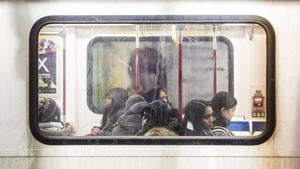
All of the plaintiffs are Illinois residents who claim they desire to carry concealed firearms on Metra trains and Chicago Transit Authority trains and buses in and around Chicago for self defense. But they said they fear being arrested and prosecuted by Illinois law enforcement under the Firearm Concealed Carry Act, a state law that generally bans people from carrying guns on trains, buses and other forms of public transit and at transit stations and on property held by transit agencies in Chicago and elsewhere in the state.
Under the law, concealed carry permit holders are allowed to transport their weapons on trains and buses, but only if they are secured in a locked container and unloaded.
Illinois Attorney General Kwame Raoul and Cook County’s state’s attorneys, including former county prosecutor Kim Foxx and current Cook County State’s Attorney Eileen O’Neill Burke, have argued the transit carry ban is needed to promote public safety.
However, the lawsuit arrived against a backdrop of years of surging crime in Chicago and elsewhere, including on public transportation. Such crimes have included armed robberies, shootings and murder.
Most recently, a spate of violent incidents on the CTA have grabbed headlines and generated outrage in Chicago and beyond.
On Nov. 19, a woman on a CTA Blue Line train was set on fire randomly by a man who was supposed to be on electronic monitoring for an unrelated assault on a social worker.
On Nov. 8, a man stabbed a woman while she sat on a bench at a Blue Line station awaiting a train.
On Thanskgiving, a group of assailants stabbed a man on a Red Line train near 47th Street when he fought back against their ultimately successful attempt to rob him.
And in early December, a seven-time convicted felon was charged with attempted murder for pushing a man with intellectual disabilities onto the tracks in front of an approaching Blue Line train in suburban Forest Park.
For the year, Chicago Police say crime on the CTA is down 3% compared to 2024. But the CTA and Chicago Police Department have “surged” police onto CTA trains and stations in recent weeks, apparently in large response to the news-generating violence and criminal attacks that continue to occur.
The plaintiffs in the legal challenge to the state’s law say they will only feel safe to take public transit if they are legally allowed to carry a firearm to potentially defend themselves against such attacks.
The gun owners filed their petition for appeal with the Supreme Court on Oct. 31.
They are represented on appeal by attorney David Sigale, of suburban Lombard; and attorneys David H. Thompson, Peter A. Patterson and William V. Bergstrom, of the firm of Cooper & Kirk PLLC, of Washington, D.C.
They assert that the Seventh Circuit judges improperly allowed the state and Cook County to exploit language in the Bruen ruling, opening the door to laws that could ban the carry of firearms in “sensitive places.”
They said the state should not be allowed to extend the definition of “sensitive places” to include public transportation systems, used by millions of people every day, and on which armed criminals routinely target defenseless victims for armed robbery, assaults and even murder.
Initially, Illinois Attorney General Kwame Raoul and Cook County State’s Attorney O’Neill Burke told the Supreme Court they had waived their right to file a response.
The Supreme Court then indicated justices would consider the gun owners’ appeal at a conference on Jan. 9.
The high court then followed that with the order requesting replies from the state and county.
It is not known when the Supreme Court may ultimately rule on whether to accept the gun owners’ appeal.






Showers And Thunderstorms Likely
Latest News Stories

Will County Executive Committee Rejects School Choice Advisory Referendum
Frankie’s Pizza Celebrated for 42 Years of Business in Monee

‘Welcome Move’: 815 Mulch-It Granted More Time to Relocate in Homer Glen

Meeting Summary and Briefs: Public Works & Transportation Committee for December 2, 2025
Land Use & Development Committee forwards Women’s Residential Recovery Center
Will County Board Members Question Fairness of New Transit Tax Structure
Iroquois Paving Expands Operations; Tractor Supply Eyeing Spring Opening
Congress drags on full year funding bills, risking second govt shutdown

Exclusive: First Nation reservation grappling with transnational crime

P&Z Commission Advances Plan for Construction Debris Fill Operation on Brandon Road
Regional Transit Agencies Tout New State Funding, Prepare for Shift to ‘NITA’

Illinois legalizes physician-assisted suicide; critics warn of moral, safety risks