Plaintiff in redistricting lawsuit predicts Supreme Court fight
The lead California legislator heading up the federal lawsuit challenging congressional redistricting expects the case to land in the U.S. Supreme Court.
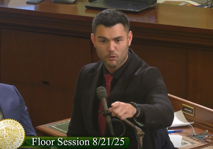
“If this has to go to the Supreme Court, we’re more than happy to take it to the Supreme Court,” Assemblymember David Tangipa, R-Fresno, and lead plaintiff in the case, told The Center Square on Thursday. “It probably will end up there either way, whether we appeal or Gov. Newsom’s team appeals.”
The case, heard this week in U.S. District Court in downtown Los Angeles, ended after two days of testimony and one day of closing arguments. The three-judge panel deciding the case – Josephine L. Staton, Kenneth Kiyul Lee and Wesley L. Hsu – adjourned the court early Wednesday afternoon.
Tangipa previously told The Center Square he believes the judges’ ruling could come by Friday.
During closing arguments on Wednesday, lawyers representing Tangipa and the U.S. Department of Justice, another plaintiff, said the Proposition 50 maps California voters approved in the Nov. 4 special election are illegal. Attorneys argued the newly-drawn maps constitute a racial gerrymander, which runs afoul of the Voting Rights Act of 1965.
Lawyers defending the maps on behalf of Gov. Gavin Newsom and California Secretary of State Shirley Weber said the maps constitute a gerrymander, but not a racial one. Rather, the maps constitute a politically-partisan gerrymander, which does not go against the Voting Rights Act, according to the attorneys.
California voters passed Prop. 50 on Nov. 4 with 64.4% of the vote, with 7,452,945 for and 4,116,810 against. Tangipa filed the lawsuit days later, alleging that the special election to re-draw California’s congressional districts amounted to a “rush-job rejiggering” of district lines. The mid-decade redistricting push was California’s response to Texas’ own mid-decade redistricting effort earlier this year. The Texas effort is designed to pick up five Republican seats in the U.S. House during the 2026 midterm election. The California map is meant to help Democrats gain five seats to counter that.
If the Prop. 50 maps are allowed to stand, the maps would be in effect for the 2026 midterm elections, the 2028 presidential election and the 2030 midterm election. Then the power to draw district maps would go back to the California Citizens Redistricting Commission. California voters approved the creation of the commission in 2008 to draw state legislative district lines before extending that power two years later to include congressional districts.
“In California, we should be able to trust that our elections are fair and transparent,” Assemblymember Alexandra Macedo, R-Tulare and a member of the Assembly Elections Committee, told The Center Square via email Thursday. “Proposition 50 disregards the California Independent Redistricting Commission’s maps and replaces them with new gerrymandered congressional lines that are now being challenged in federal court.”
Democratic legislators who sit on election committees in the California Assembly and state Senate did not respond before press time Thursday to The Center Square’s requests for comment.



Showers And Thunderstorms Likely
Latest News Stories
In last four years, five northern states saw most illegal crossings

Illinois quick hits: Another attack on CTA passenger; plaintiffs move to dismiss their ICE use of force case
Some push for FDA approval of psychedelic treatments for veterans

WATCH: Pritzker: ‘No’ to state taxpayer-funded guaranteed income
WATCH: IL congresswoman willing to withhold highway dollars over CDL issues

Disability group, coroners press governor ahead of assisted suicide decision
35 lawmakers unveil bipartisan health care proposal, beg leadership to adopt it

DOJ confirms identity of pipe bomb suspect
Trump admin implements swath of visa restrictions for dozens of countries
Legislation would limit U.S. military action toward Venezuela

Fanatics starts sports prediction app, not subject to state taxes, in 24 states

Judge dismisses challenge to National Park Service cash policy