U.S. Supreme Court to decide birthright citizenship case
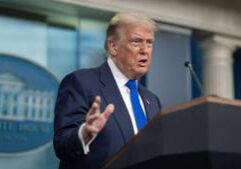
The U.S. Supreme Court on Friday agreed to decide a case challenging President Donald Trump’s plan to end birthright citizenship.
On the first day of his second term, Trump signed an executive order directing federal agencies to refuse to recognize U.S. citizenship for children born in the U.S. to mothers who are in the country illegally or are here legally on visas if the father is not a U.S. citizen or lawful permanent resident. The order also called for denying U.S. citizenship to those children born in the U.S. if at least one parent isn’t an American citizen or green card holder.
A U.S. Supreme Court ruling more than a century ago held that children born in the U.S. to foreign parents are U.S. citizens under the 14th Amendment. However, the Trump administration said the 14th Amendment has “never been interpreted” to give universal citizenship to everyone born in the country.
Section 1 of the 14th Amendment states: “All persons born or naturalized in the United States, and subject to the jurisdiction thereof, are citizens of the United States and of the State wherein they reside.”
Several lower federal court judges blocked Trump’s attempts to end birthright citizenship in response to lawsuits filed by state attorneys general, mothers and others.
The Supreme Court already has heard arguments related to nationwide injunctions issued as a result of the legal challenges. Now it will decide the merits of Trump’s executive order.
A decision will is expected in 2026.
• Brett Rowland contributed to this report.




Showers And Thunderstorms Likely
Latest News Stories

Illinois quick hits: More bills enacted into law; former ComEd CEO seeking Trump pardon
Pritzker enacts bills, including measure decoupling IL from federal tax code
WATCH: California co-leads suit over $100,000 H-1B visa fee

WATCH: Trump outlines AI order, calls Pritzker ‘totally unreasonable’

Entrepreneur’s supporters say case law may result in release
GOP lawmakers silent on Trump’s EO punishing state AI guardrails

Gabbard: 2,000 Afghan refugees in U.S. have ties to terrorism

Op-Ed: No more CDL mills: Trump’s DOT puts safety back in the driver’s seat
Illinois Gov. Pritzker signs assisted suicide bill
Hochul weighs AI regulations as Trump sets federal rules
EXCLUSIVE: First Nation police chiefs want to participate in border security efforts
Justice Department sues Fulton County over election records