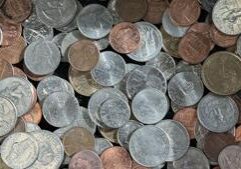
Penny: State revenue, retailers’ leverage strategy are in report’s thoughts
State governments are left holding the bag on the U.S. government’s halt to the production of a penny, a new report from the National Conference of State Legislatures says.
Specifically, it’s handling cash transactions.
With each penny costing 3.7 cents to produce, the U.S. Mint ceased production last month.
The report says, “Notably, the federal government did not issue any regulations around the end of production, continued to treat the penny as legal currency and initially expected that the federal reserve would continue to accept and supply pennies while supplies last.”
Among the questions: Will electronic and cash payments be handled differently? Electronic payments can continue to be broken down by cents, but that may not be the case for cash payments, requiring rounding.
State revenue and legal risks are in play.
The report says, “The development of guidance to address strategic pricing and encourage clear rounding rules is essential, as is clear communication of new policies to both consumers and businesses.”
Federal reserve terminals have recently been experiencing shortages of pennies and in some cases have stopped supplying them or accepting them, the report said.
“This has required vendors to make spot decisions on how they will handle cash transactions,” according to the report.
States face several issues, from differentiating cashless and cash transactions, rounding, and scarcity of pennies. One concern is that retailers might “engage in strategic pricing that leverages rounding rules to their advantage.”
“As the production of pennies ceased and existing supplies dwindle, both sellers and buyers are facing or will soon face the need to round cash transactions to the nearest five cents, with the nickel assuming the role of the smallest denomination in circulation,” the report states.
The report identifies nine areas that may need to be addressed by state policy or legislation including “rounding clarity,” refunds and consumer protections, effects on state revenue and legal risks.
“Finally, states will need to consider whether federal guidance and/or regulation and legislation is necessary to meet their objectives,” the report says.
Canada stopped distributing pennies in 2012 and its policies might be a model for the U.S., the report states.
“Prices and total payments continued to be calculated in one-cent increments, with rounding applied only at the final stage-after tax had been added,” the report stated on Canada’s policies. “Importantly, tax calculations were based on the pre-tax amount, not the rounded total, preserving accuracy in tax reporting.”
Monee Events
Latest News Stories

Meeting Summary and Briefs: Will County Legislative Committee for November 4, 2025
Will County Saves $5.7 Million in Bond Refinancing, Maintains High Credit Ratings
Will County Saves Nearly $5.74 Million in Bond Refinancing, Explores Future Borrowing Options

Will County Board Advances New Speed Limits in Green Garden and Frankfort Townships

New Lenox Garage Variance Denied After Neighbor Cites ‘Massive’ Scale and Neighborhood Impact
State Veto Session Passes Energy Bill Limiting County Zoning, Approves Toll Hike for Mass Transit

Commission Approves Peotone-Area Farmhouse Split, Overruling Staff’s “Spot Zoning” Concerns
Will County Finance Committee Hits Impasse on 2025 Tax Levy, Postpones Budget Votes
Federal Lobbyists Brief Will County on Government Shutdown, Warn of SNAP and TSA Disruptions
Commission Approves Mokena-Area Garage Variance Over Village’s Objection
Will County Committee Advances Gougar Road Bridge Project with Over $540,000 in Agreements
Will County Committee Shapes 2026 Legislative Agendas on Housing, Energy, and Health
Commission Grants Green Garden Solar Farm Project Variance Extension

Will County Committee Advances Phased Takeover of Central Will Dial-A-Ride Service