
Colorado receives $420M from feds for high-speed internet
The federal government awarded Colorado nearly $420.6 million for high-speed internet investments throughout the state.
The announcement came this week and was applauded by Colorado Gov. Jared Polis.
“For too long, thousands of Coloradans have been stuck without the reliable, high-speed internet needed to work, learn, run a business, or access health care,” Polis said. “This historic investment will help ensure that Coloradans have access to affordable, reliable high-speed internet required to thrive.”
The federal grant funding is part of the $42.45 billion Broadband Equity, Access, and Deployment Program, which was first passed in 2021. The goal of the program is to ensure every American—including those in rural, underserved, or low-income communities—has access to reliable, high-speed internet.
Through this program, the nation is receiving its single largest investment in high-speed internet infrastructure. In Colorado, the funding is expected to provide internet to 96,000 Coloradans.
The Colorado Broadband Office, under the Governor’s Office of Information Technology, will be responsible for implementing the program.
“This approval from the NTIA is the culmination of years of intensive planning and application processes. This is a monumental win for rural Coloradans who have lacked access to high-speed internet,” said Brandy Reitter, CBO executive director. “This highly anticipated $420.6 million in BEAD funding will be strategically deployed to connect our most remote communities, directly addressing the digital divide.”
Unserved and underserved areas of Colorado will be prioritized for the funding, which will be used for a mix of fiber, wireless, and low-Earth orbit satellite installations.
Colorado has long been leading the push for taxpayer-funded broadband infrastructure.
When the BEAD Program was first passed as a part of the Biden-Harris Administration’s “Internet for All” initiative, Colorado U.S. Sens. Michael Bennet, John Hickenlooper, and U.S. Rep. Joe Neguse played central roles in that.
“Their work to modernize broadband standards, expand affordability programs, and prioritize unserved and underserved communities positioned Colorado as one of the first states in the nation to receive NTIA approval to access BEAD funding and move from planning to implementation,” Polis’ office said in a statement. “This strong federal-state partnership laid the foundation for today’s approval and continues to accelerate Colorado’s progress toward connecting households with affordable, reliable high-speed internet.”
Already, Colorado was allocated from BEAD $5 million in planning funds in 2022 and over $826 million in funding in 2023. The companies the state is contracting with will have four years to complete construction on the approved projects.
So far, all but three of the 56 U.S. states and territories have submitted their final proposals for the BEAD funding. Of those, 29 have had their proposals approved.
According to Connected Nation’s BEAD Tracker, the average cost to provide internet per location nationally is $6,036.
Compared to many other states, Colorado’s cost is on the lower end per location. In Colorado, that average cost is $4,378. The most-expensive project cost totals over $15,000.
Amazon Kuiper is going to be rolling out the majority of the Colorado locations, followed by Maverix Broadband and Highline.




Mostly Sunny
Latest News Stories
IL House Speaker: ‘not even close’ to school choice legislation

IL comptroller: Chicago mayor’s policies chase businesses away

Menards settles deceptive 11% rebate lawsuit for $4.25M with 10 states
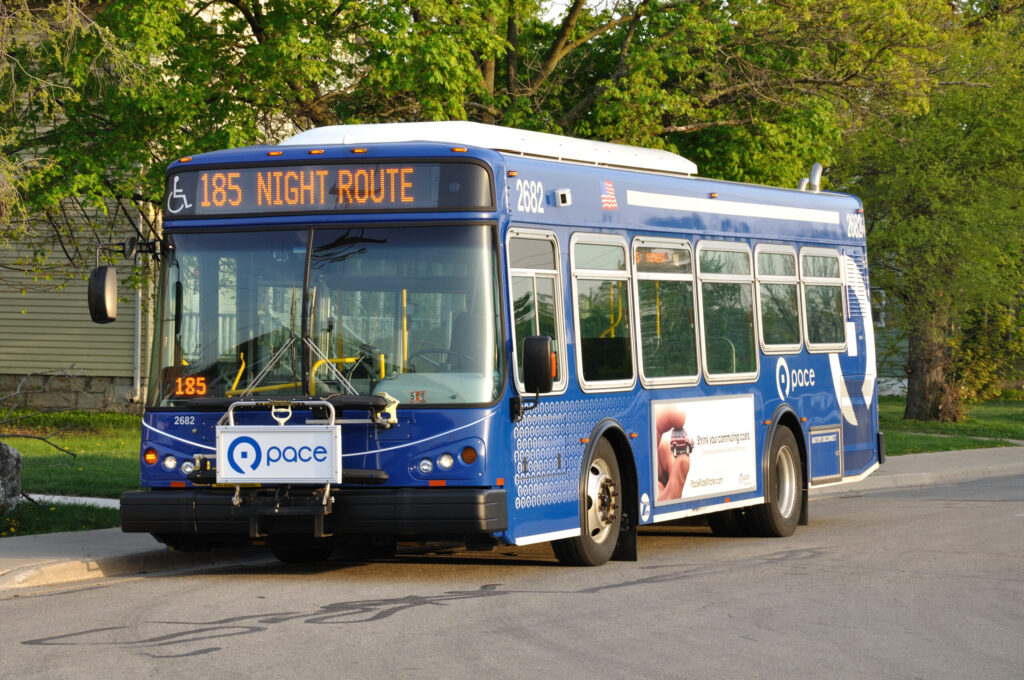
Pace Expands I-55 Service and Launches ‘VanGo’ in Joliet
Will County Executive Committee Rejects School Choice Advisory Referendum
Frankie’s Pizza Celebrated for 42 Years of Business in Monee
‘Welcome Move’: 815 Mulch-It Granted More Time to Relocate in Homer Glen

Meeting Summary and Briefs: Public Works & Transportation Committee for December 2, 2025
Land Use & Development Committee forwards Women’s Residential Recovery Center
Will County Board Members Question Fairness of New Transit Tax Structure
Iroquois Paving Expands Operations; Tractor Supply Eyeing Spring Opening
Congress drags on full year funding bills, risking second govt shutdown