Debate grows as states consider teacher strike bans
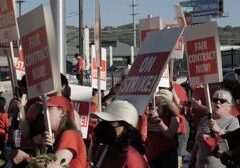
Many states are considering new policies affecting teachers’ ability to strike or participate in protests, and education officials and labor advocates continue to debate the legality of teacher strikes.
The strikes are banned or heavily restricted in roughly 38 states and Washington, D.C. In states such as Georgia, North Carolina, South Carolina, Texas and Virginia, legislation explicitly prevents teachers from striking.
Twelve states explicitly allow teacher strikes, including Alaska, California, Colorado, Hawaii, Illinois, Louisiana, Minnesota, Montana, Ohio, Oregon, Pennsylvania and Vermont. In a few states, such as South Carolina, Utah and Wyoming, the legality of strikes is not clearly defined in statutes or case law.
In Arizona, the proposed House Bill 2313 would prohibit public school teachers from striking or participating in organized work stoppages. It has drawn criticism from union officials.
Geneva Fuentes, communications director for the Arizona Education Association, the state’s largest teachers’ union, warned that the bill could have unintended consequences for school districts.
“HB 2313 is a badly drafted bill that would withhold funding from school districts if educators speak to each other about illness and other legitimate absences from work,” Fuentes told The Center Square in an email. “In reality, the broader effect of this bill would be to strip much-needed funding from our students and prevent educators from communicating with each other about basic issues that affect student learning.”
Fuentes added that the bill does nothing to address Arizona’s teacher recruitment and retention challenges.
“Proposals like HB 2313 only add to existing pressures and do nothing to address the real challenges facing Arizona schools,” Fuentes said. “Strong public schools require collaboration between policymakers and educators. Protecting students means protecting stable funding for their schools, and retaining educators starts with respecting their profession.”
Because taxpayer dollars fund schools and teacher salaries, education officials argue that strikes could disrupt classroom instruction.
In an exclusive interview with The Center Square, Arizona Superintendent of Public Instruction Tom Horne said teachers have the right to protest but should not do so during school hours.
“They have a First Amendment right to protest, but they can do it after school,” Horne said. “They don’t have to use it as a reason not to do the work that the taxpayers are paying them for.”
Horne said he supports HB 2313, arguing that schools exist to educate students using taxpayer funds.
“The taxpayers are paying money, and the money goes into salaries for these teachers to teach the kids,” he added. “So if they walk out during school hours to protest, they’re stealing from the taxpayers. They’re getting money without doing the work.”
The debate comes as educators’ political activity has raised concerns in other states.
The Texas Education Agency issued guidance after hundreds of students in several major cities joined national walkouts protesting federal immigration enforcement earlier this year.
The TEA warned that teachers who aid or encourage students to leave class for such protests could face investigation or potential sanctions, including licensure revocation.
The Center Square reached out to the TEA for a comment but has not received a response.
Texas Attorney General Ken Paxton later opened investigations into several school districts for facilitating and failing to keep students safe and accountable during various student protests against lawful immigration enforcement.
“I will not allow Texas schools to become breeding grounds for the radical Left’s open borders agenda,” the Republican attorney general said in a statement. “Let this serve as a warning to any public school official or employee who unlawfully facilitates student participation in protests targeting our heroic law enforcement officers: my office will use every legal tool available to hold you accountable.”
Meanwhile, lawmakers in Maryland are considering legislation that would expand teachers’ labor rights. House Bill 1492, introduced by more than 20 Democratic lawmakers, would repeal the state’s ban on teachers’ union strikes and allow public school employees, such as teachers and librarians, to strike without retaliation.
Teacher strikes are illegal in Washington state, but the law does not specify penalties, and strikes continue to occur across the state, The Center Square reported.
In 2025, state Democrats approved Senate Bill 5041, allowing striking workers to receive unemployment benefits for up to six weeks.
However, a 2006 formal opinion by then Attorney General Rob McKenna stated that “state and local public employees, including teachers, have no legally protected right to strike.”
The Center Square reported in January that federal officials recently arrested three people in connection with a protest that disrupted a Sunday church service in St. Paul, Minnesota. One of those arrested, Chauntyll Louisa Allen, serves as clerk of the St. Paul Board of Education.





Slight Chance Rain Showers then Slight Chance Showers And Thunderstorms
Latest News Stories
Energy affordability report ranks Illinois 31st, warns of ‘burdensome’ mandates
Monee Township Board Approves Nearly $30,000 for New Generator, Secures Multi-Year Audit Contract
Illinois voices weigh in on birthright citizenship case
U.S. rep.: Mexico still not delivering water to South Texas, despite claims
Supporters say will storage option would streamline judicial process

Dallas Fed: Geopolitical conflicts creating uncertainty for U.S. oil and gas industry
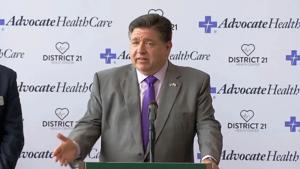
Illinois Quick Hits: Pritzker pushes for E15
Monee Village Board Approves Post-Election Salary Increases for Elected Officials

Love’s Two Home Runs, Slattery’s One-Hitter Power Crete-Monee Past Thornridge 17-0

Oak Lawn Erupts for 19 Runs to Overwhelm Crete-Monee
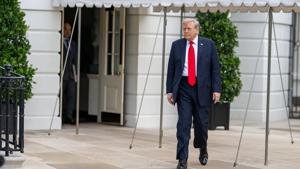
Trump addresses nation on Iran strikes; signals conflict nearing end
IL biometrics privacy reforms apply to past cases, too: Appeals court