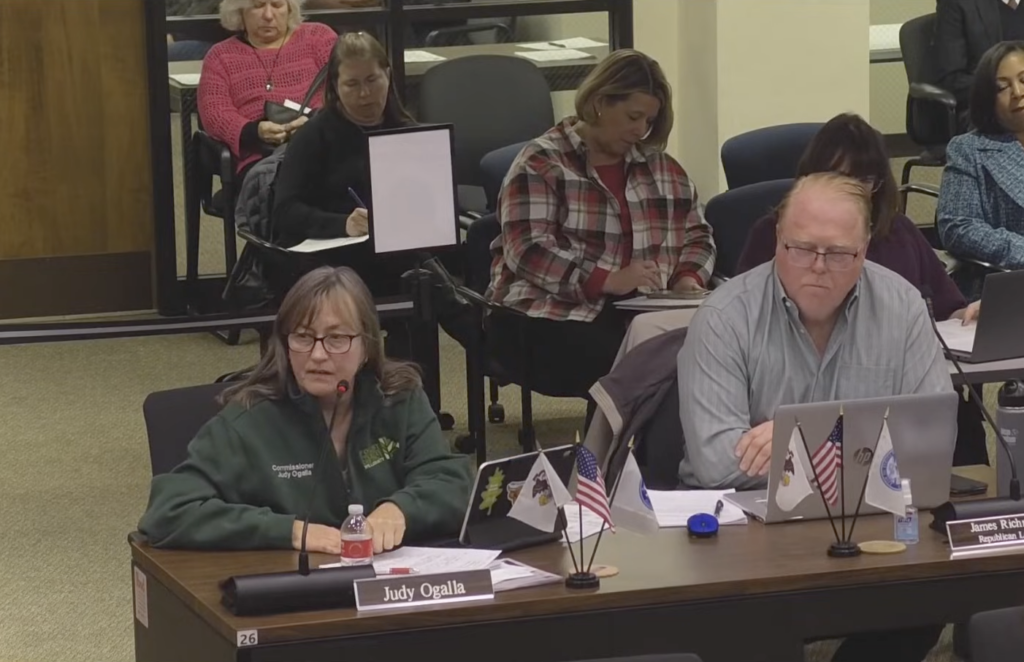

U.S. House introduces bill to require national debt transparency
Lawmakers introduced a bill to require greater transparency on the national debt and GDP.
Reps. Lloyd Smucker, R-Penn., and Jared Golden, D-Maine, introduced the Debt-to-GDP Transparency and Stabilization Act on Wednesday. The legislation would require the president to submit reports in his annual budget requests that detail the effects of his budget on the country’s national debt and GDP.
“Our national debt is the greatest threat to our country,” said Rep. Smucker. “I’m hopeful this legislation will help correct our fiscal trajectory and ensure our nation’s long-term economic prosperity.”
The legislation would also require congressional budget resolutions to report the effect of policies on the national debt and GDP.
The United States’ national debt is more than $38 trillion at the time of publication. The national debt is expected to reach 175% of U.S. GDP by 2056, according to the Congressional Budget Office.
The U.S. House Committee on the Budget passed similar legislation in its last Congress. The legislation never made it to a vote on the floor of the House.
“It’s essential that the national debt is front of mind for lawmakers when making decisions about the federal budget,” said Rep. Golden. “Equipping Congress with more information about bills’ impact on the debt will enable more informed lawmaking.”
The Committee for a Responsible Federal Budget praised the bill’s introduction. Maya MacGuineas, president of the CRFB, said passage of the bill would help lawmakers and the public understand budget processes.
“The public deserves to know the size and scope of planned debt and deficits,” MacGuineas said.
The National Taxpayers Union also offered support and praise of the introduced legislation.
“Our country is barreling toward a fiscal crisis and we need to leverage every tool in the toolbox to identify, report, and tackle the problem before it’s too late,” said Thomas Aiello, Vice President of Federal Affairs at NTU.
Reps. Don Bacon, R-Neb.; Ben Cline, R-Va.; Don Davis, D-N.C., Marie Glusenkamp-Perez, D-Wash.; Glenn Grothman, R-Wis.; Dan Mueser, R-Penn.; Jimmy Pannetta, D-Calif,; Scott Peters, R-Calif.; Tom Suozzi, D-N.Y. and Rudy Yakym, R-Ind., also cosponsored the legislation.
It is unclear whether the legislation with move further than it did during the last Congress. The government has remained in a partial shutdown since Feb. 14, after lawmakers did not agree on proposals to fund the U.S. Department of Homeland Security.
Delayed funding measures will likely slow down budget proposals and requests for the upcoming fiscal year. Congress has until Sept. 30 to finalize appropriations in fiscal year 2027.
“Lawmakers on both sides of the aisle recognize the urgency of addressing the debt crisis,” Smucker said. “Tackling our national debt must be a priority. This legislation increases transparency and creates accountability in Washington to deliver real, tangible solutions.”






Chance Showers And Thunderstorms
Latest News Stories

Officials: Stockton stands together after fatal shooting

Illinois quick hits: Armed sex offender sentenced; most are family farms

HHS: Pritzker ‘eroded public trust’ in public health

U.S. Supreme Court to decide birthright citizenship case
WATCH: House passes bills to block CCP’s influence on schools

New fiscal year begins with lowest border apprehensions in recorded history

IL legislator credits Trump for U.S. Steel announcement
Debate over AI heats up as GOP scraps moratorium in annual Defense bill

Evers vetoes 9 bills, including block on illlegal BadgerCare enrollment

Bull Moose Project criticizes Sen. Lummis over stalled crypto legislation

Polis calls on U.S. Treasury to extend free tax filing service
Tensions Flare as Board Members Clash Over Budget Process and Protocol