U.S. Supreme Court appears skeptical of Cuban land claims
Justices of the U.S. Supreme Court appeared skeptical of Cuban claims to land during two oral arguments on Monday where U.S. companies were seeking to recover decades-old losses under a law targeting Cuba’s communist government.
The court heard arguments in Havana Docks v. Royal Caribbean Cruises and Exxon Mobil v. Corporacion Cimex. Both cases challenged laws that allowed U.S. citizens to bring lawsuits against anyone who trafficked in property that was confiscated by the Cuban government on or after Jan. 1, 1959.
In 2016, several cruise lines began using a set of docks that the Havana Docks company had interest in, although the Cuban government took over operations of the docks in 1960. The cruise lines argued that, even without the government takeover, Havana Docks lost its interest in the property in 2004.
However, lawyers for Havana Docks argued that the corporation operated plenary authority over the docks and should have been consulted when cruise lines began using their property. Justices on the court appeared skeptical of this claim and questioned to what extent Havana Docks had interest in surrounding properties.
Justice Amy Coney Barrett posed a hypothetical to Havana Docks’ lawyers over whether cruise ship companies could be liable for a grocery store only loosely connected to the docks in question. She said allowing a suit like this to go forward could result in enormous monetary damages for cruise ship companies.
“[It is] unbelievable to me that if you had these disparate interests all over the island that someone who uses the docks is going to be liable [for] the value of the grocery store,” Barrett said. “There’s no way for the defendant to get out from under the huge liability.”
Justice Sonia Sotomayor also appeared to be skeptical of Havana Docks’ claims and highlighted her fear that this litigation would provide an “infinite” amount of damages for companies that used the Cuban docks.
“You’re seeking now not one compensation with interest; you’re seeking infinite compensation forever,” Sotomayor said. “There’s a due process problem from you thinking you’re entitled to infinite compensation.”
Paul Clement, a lawyer for Royal Caribbean Cruises, said the property interest of the docks in Havana ended after 2004, regardless of the Cuban government’s takeover. He argued that Cuba’s takeover of the docks resulted in no compensation for the U.S. companies interested in conducting business.
“What makes what Cuba did unlawful is that they took U.S. national property without compensation,” Clement said.
In Exxon Mobil v. Corporacion Cimex, the case is surrounding oil assets previously owned by Exxon that were seized by the Cuban government in 1960. Similarly, the Cuban government never paid Exxon for its seizure of assets.
The argument hinged on whether Exxon had to satisfy its claim under the Foreign Sovereignty Immunities Act – a law to determine if a foreign state or its agencies can be sued in the United States.
Generally, foreign states are immune to prosecution under the FSIA. However, there are several exceptions to the FSIA, including if a case involves a violation of international law or it is an action based on commercial activity.
The justices appeared skeptical of Exxon’s claims that the statute explicitly provides for a lawsuit against Cuba. Justices Ketanji Brown Jackson and Brett Kavanaugh highlighted their fear that allowing this lawsuit to go forward would give Exxon the ability to “punish” the Cuban government.
Curtis Gannon, Deputy Solicitor General at the U.S. Department of Justice, argued these kind of enforcement actions would incentivize a transition to democracy in Cuba.
Jules Lobel, a lawyer representing Corporacion Cimex, argued that Congress considered adding an additional exception to the FSIA but did not, leaving Cuba immune to an enforcement action in this case.
Morgan Ratner, a lawyer for Exxon Mobil, argued that if Cuba was immune from litigation, it would advantage a foreign government over state and local governments when pursuing lawsuits against the United States.
“Foreign governments shouldn’t be better off than states and Indian tribes,” Ratner said.
Justices pointed to a provision that allowed the president to decide whether lawsuits against Cuba were in the United States’ best interest. Justice Neil Gorsuch said the president should have deference over these lawsuit decisions.
Justices on the court will deliberate further after oral arguments and are expected to issue a decision in these cases by July.





Chance Showers And Thunderstorms
Latest News Stories
IDOT Plans to Invest Over $1.3 Billion in Will County Roads Through 2031
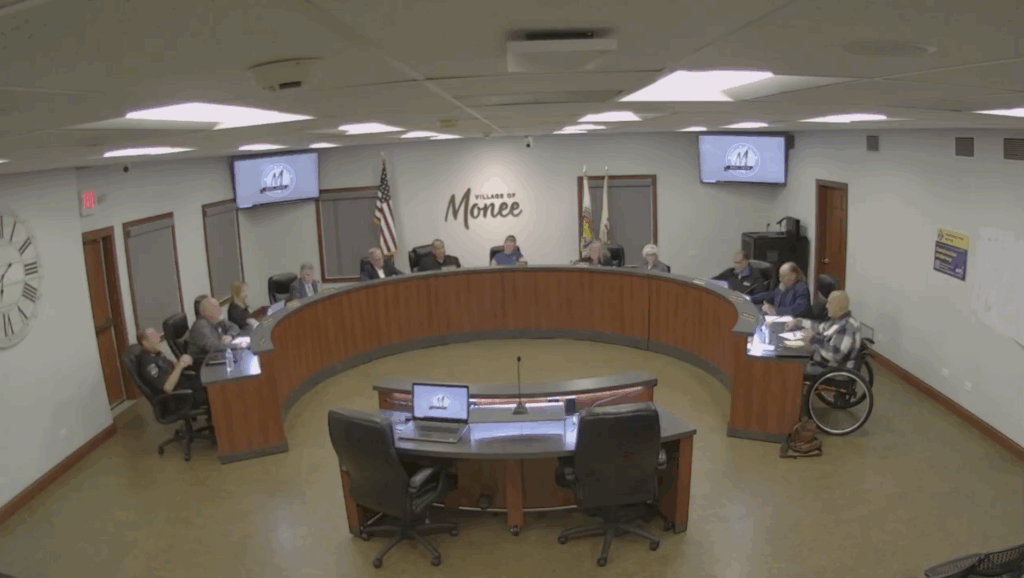
Monee Dissolves TIF District 3, Transfers $1 Million Surplus

Committee Advances 50% Increase in Mental Health Levy on 4-3 Vote

Will County Poised to Launch Major Mental Health Initiative Based on Joliet Program’s Success

Looming State Energy Bill Threatens to Further Limit County Control Over Solar and Wind Projects
Controversial Immigrant Rights Resolution Postponed by Will County Board After Heated Debate

Will County’s Gas-to-Energy Plant Reports Nearly $460,000 Net Loss Amid Operational Setbacks

Will County to Draft First-Ever Policy on Artificial Intelligence Use
Will County Sees 50% Drop in Opioid Deaths, But Alarming Rise in Suicides
Will County Board Backs Effort to Rename ‘Stigmatizing’ Chicago Sanitary and Ship Canal
Access Will County Dial-a-Ride on Track for Full County-Wide Service in 2026
Divided Will County Board Authorizes Condemnation for 143rd Street Widening