
Capital Imp Committee Debates ‘Human Factor’ in Drafting New Artificial Intelligence Policy
Will County Capital Improvements & IT Committee Meeting | Jan. 6, 2026
Article Summary: The Will County Board Capital Improvements and IT Committee launched a comprehensive discussion on creating a countywide Artificial Intelligence (AI) policy during its Jan. 6 meeting, emphasizing the protection of jobs and data security. The committee directed staff to survey all county departments to determine current AI usage before finalizing regulations.
AI Policy Key Points:
-
Job Protection: Committee members prioritized a “human factor” clause to ensure AI software does not replace county employees.
-
Data Security: The Information Technology (IT) department recommended using “closed systems” to prevent confidential county data from leaking into public AI models.
-
Departmental Survey: Chief of Staff Nick Palmer and staff will commission a survey of all county departments and elected officials to inventory current AI applications.
-
Policy vs. Ordinance: The committee leans toward a policy rather than a county ordinance to regulate internal operations and avoid potential legal complications with third parties.
JOLIET — The Will County Board Capital Improvements and IT Committee on Tuesday, Jan. 6, 2026, began the complex process of drafting a policy to govern the use of Artificial Intelligence (AI) across county government, placing a heavy emphasis on protecting county jobs and securing sensitive data.
Committee Chair Mica Freeman (D-Plainfield) initiated the discussion by referencing a “policy directive” outline, noting the need to move beyond high-level discussion and toward concrete regulations. The committee debated whether to adopt an ordinance, similar to one reviewed from San Diego, or an internal policy.
The committee reached a consensus to pursue an internal policy after Assistant State’s Attorney Chris McGrath advised that an ordinance could create unnecessary legal liabilities if it attempted to regulate third parties.
“If you’re just trying to regulate what the county is doing in-house, all you need is a policy,” McGrath told the committee.
A primary concern for board members was the potential for AI to displace human workers. Member Mark Revis (R-Plainfield) argued strongly for language explicitly preventing job replacement.
“I don’t think AI should be allowed to replace human jobs,” Revis said. “I think it is dangerous when you have a robot taking the job of a human.”
Revis cited statistics regarding job losses in the private sector and urged the committee to defend “human beings and people first.” Member Steve Balich (R-Homer Glen) agreed, noting that while technology increases efficiency, policies must ensure accuracy and accountability.
Jason Donisch, the county’s IT director, provided technical guidance, advising the board to distinguish between “machine learning,” such as spell-check or data analytics, and “generative AI,” which creates new content. Donisch warned against using “open” AI systems where county data could be absorbed into public models.
“We really don’t want to say yes to something that could potentially be a liability down the road,” Donisch said, describing the current landscape as the “Wild West.” He recommended a policy that mandates “closed circuits” where county data remains contained within the organization’s control.
Donisch noted that currently, most known AI use in the county involves transcription software or pilot programs, such as one used by the Emergency Management Agency (EMA) to update planning documents against federal regulations.
Member Elnalyn Costa (D-Bolingbrook) suggested that before a restrictive policy is implemented, the county must understand what tools are currently in use.
“If we understand practice and learn what is usable and being done well, we can then begin to consider applying that into policy,” Costa said.
Chief of Staff Nick Palmer summarized the committee’s direction, stating that staff would conduct a survey of all department heads and independent elected officials to inventory their current AI usage. The results of that survey, along with a draft policy incorporating the “human factor” and data security mandates, are expected to be reviewed at the committee’s next meeting in February.



Chance Showers And Thunderstorms
Latest News Stories
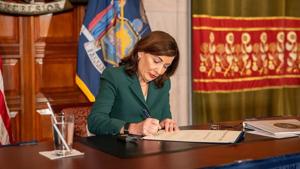
Hochul weighs AI regulations as Trump sets federal rules
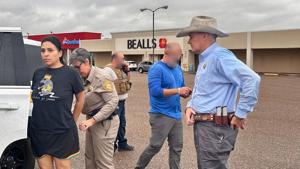
EXCLUSIVE: First Nation police chiefs want to participate in border security efforts
Justice Department sues Fulton County over election records

USPS electric fleet push sparks cost, security and job concerns

WATCH: Use of Guard debated; Trump singles out Pritzker on AI; Property tax ruling
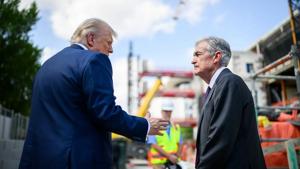
Illinois quick hits: Chicago Fed president explains vote; Treasurer encourages Bright Start gifts
EXCLUSIVE: Canadian groups, First Nation police support stronger border security

More than 9,500 commercial truckers taken off U.S. roads nationwide

New Lenox Used Car Dealership Approved by Land Use & Development Committee

Land Use Committee: Monee Solar Projects Granted Extensions; Battery Storage Plans Dropped

P&Z Commission: New Women’s Recovery Center Proposed for Patterson Road Receives Support

WATCH: ‘Unfortunate accident’: Miss. senator blasted for comment on Guard troop shootings