
Newsom predicts smaller budget shortfall than state agency
In his proposed budget, California Gov. Gavin Newsom is predicting a shortfall of $2.9 billion. That’s much less than the $18 billion shortfall projected by the Legislative Analyst’s Office.
Newsom, who released his 2026-27 budget Friday, expects much higher general fund revenues than the LAO, a nonpartisan agency.
The Democratic governor’s proposed budget estimates that general fund revenues will exceed $42 billion over the 2025 budget, fueled mainly by higher cash receipts, higher stock market levels and an improved economic outlook.
“The biggest difference in the factors and forecasts is that the LAO incorporated significant risk of a stock market downturn in their forecast,” Joe Stephenshaw, the director of the California Department of Finance, said during a news conference announcing the governor’s budget. “We do not do that.
“We don’t build in downturns into our forecast,” Stephenshaw told reporters Friday at the Capitol in Sacramento. “We do know that if there is a stock market correction to the tune of about 20%, that will have an impact on our revenues in the budget window to the degree of up to $30 billion.”
The LAO previously released a budget outlook that projected an $18 billion budget deficit in 2026-27.
While LAO representatives weren’t able to answer most questions from The Center Square, analysts in the office are reviewing the governor’s proposal and expect to release an assessment on Monday.
“The administration’s revenue estimates are notably higher than ours,” Carolyn Chu, one of two analysts to work on the Legislative Analyst’s Office budget review in November, told The Center Square on Friday. “You see that play through in the deficit estimates.”
Overall, the governor’s proposal projects a $348.9 billion budget for fiscal year 2026-27, fueled by an optimistic economic outlook. The higher state revenues would in large part be funded by high company valuations of big tech companies, particularly in the realm of artificial intelligence, according to the governor’s proposal.
However, the Pacific Research Institute, a Pasadena-based think tank, has a more skeptical view of the economy’s performance, its economist told The Center Square on Friday.
“The LAO says we’re going to have an $18 billion deficit. [The governor] says we’re going to have a $3 billion deficit,” Wayne Winegarden, an economist with Pacific Research Institute, told The Center Square. “The difference is because he’s saying we’re going to have lots of revenue from AI. We have surging revenues from income taxes because of AI, and that’s going to end, possibly, because who knows the future? We should be saving more of that money because we have difficult times ahead.”
The governor’s budget would allocate $101.5 billion to health, $17.6 billion to transportation, $41.5 billion to human services, $18 billion to corrections and rehabilitation, $27.4 billion to higher education, $90.2 billion to K-12 education and $52.4 billion to other expenditures, according to the proposal.
Notably, federal expenditures are expected to decrease, leaving California on the hook for $1.1 billion in increased costs to Medi-Cal, California’s version of the federally-funded Medicaid program, according to the proposal. An additional $300 million is expected in additional costs to the state for CalFresh.
“He’s trying to put lipstick on a pig and say that the deficit’s not what it really is,” Sen. Tony Strickland, R-Huntington Beach, told The Center Square on Friday. “What I get out of this is revenues are way up, and what that really points out is California doesn’t have a revenue problem, it has a wasteful spending problem. Yet again, another year where the governor is proposing to spend more than what we take in.”
The chair of the Senate Budget and Fiscal Review Committee, however, said he thought that the governor’s budget was more accurately based on current economic circumstances than the November Legislative Analyst’s Office report.
“I was pleasantly surprised that we might be able to do a status-quo budget, and what’s missing is extensive cuts,” Sen. John Laird, D-Monterey, told The Center Square on Friday. “It means we can continue existing levels of service into the next year with the governor’s budget.”




Slight Chance Rain Showers then Slight Chance Showers And Thunderstorms
Latest News Stories
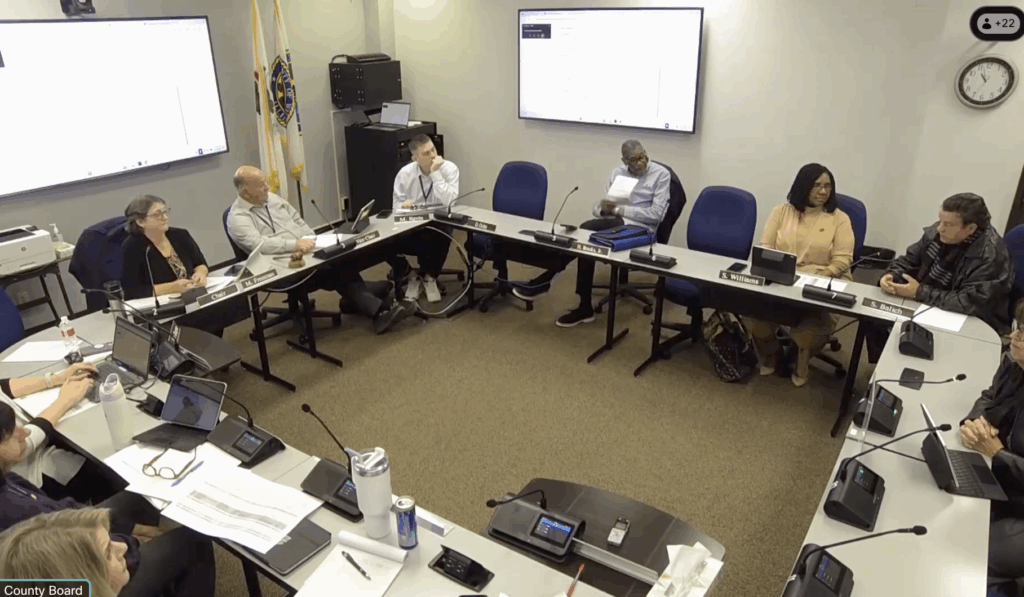
Will County Saves Nearly $5.74 Million in Bond Refinancing, Explores Future Borrowing Options

Will County Board Advances New Speed Limits in Green Garden and Frankfort Townships

New Lenox Garage Variance Denied After Neighbor Cites ‘Massive’ Scale and Neighborhood Impact
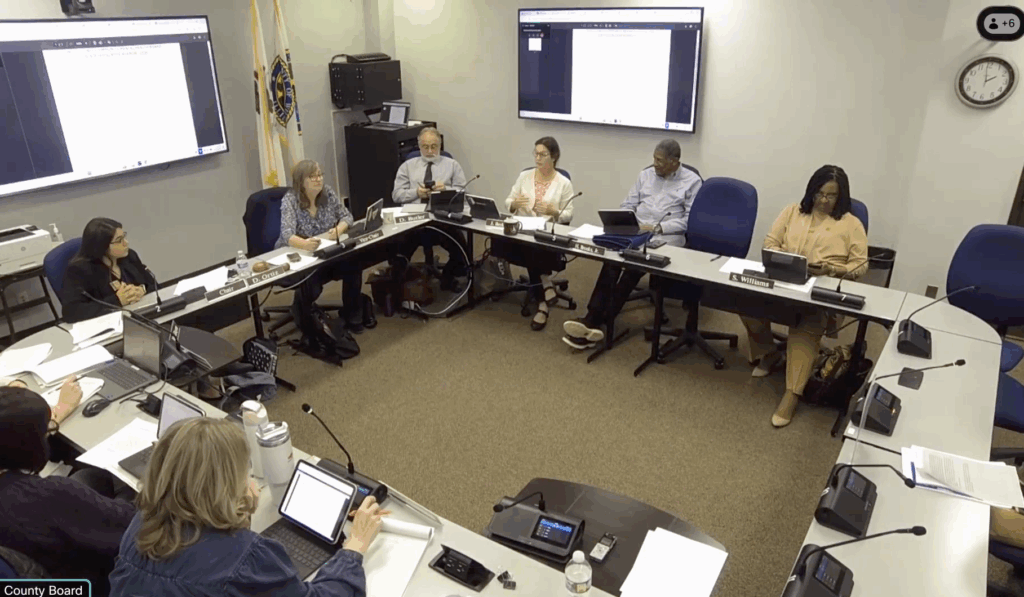
State Veto Session Passes Energy Bill Limiting County Zoning, Approves Toll Hike for Mass Transit

Commission Approves Peotone-Area Farmhouse Split, Overruling Staff’s “Spot Zoning” Concerns
Will County Finance Committee Hits Impasse on 2025 Tax Levy, Postpones Budget Votes
Federal Lobbyists Brief Will County on Government Shutdown, Warn of SNAP and TSA Disruptions
Commission Approves Mokena-Area Garage Variance Over Village’s Objection
Will County Committee Advances Gougar Road Bridge Project with Over $540,000 in Agreements
Will County Committee Shapes 2026 Legislative Agendas on Housing, Energy, and Health
Commission Grants Green Garden Solar Farm Project Variance Extension

Will County Committee Advances Phased Takeover of Central Will Dial-A-Ride Service