WATCH: Pritzker says receipts shown ‘all the time’ as audits show weaknesses
(The Center Square) – Gov. J.B. Pritzker insists there’s not been any alleged fraud in Illinois that should cause the Trump administration to withhold funds for welfare programs.
Wednesday, U.S. Department of Health and Human Services Assistant Secretary Jim O’Neill said the nearly $1 billion being frozen for Illinois is part of $10 billion from states he said are potential fraud hotspots that deserve more scrutiny.
“We put the ‘defend the spend’ on that beginning of last week, insisting that states provide receipts when they ask for money,” O’Neill told The Center Square.
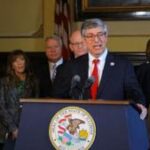
At an unrelated event in Joliet Thursday, Pritzker was asked, why not show the receipts?
“That we do all the time,” Pritzker said when asked by The Center Square. “It’s all available for anybody to look at and, yeah, I mean that’s not a problem for us. We don’t have to deliver anything. We’ve not, there have not been any allegations of it.”
Pritzker said state government gets audited all the time.
“There is an auditor general that exists in the state of Illinois, and we constantly get audited,” Pritzker said. “And by the way, we have a very robust system of oversight, checking in on the child care centers across the state of Illinois.”
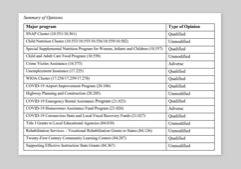
The most recent audit for Illinois through the Federal Audit Clearinghouse shows the state receiving opinions of either severe or specific material weaknesses over handling of various federal taxpayer-funded programs.
In the state’s comprehensive financial audit for fiscal year 2023, there were adverse opinions for the Crime Victim Assistance Fund and the COVID-19 Homeowner Assistance Fund Program, a repeated finding for that program for failure to monitor subrecipient cash draws and failure to establish subrecipient monitoring procedures.
For fiscal 2023, there were also qualified opinions for the state’s handling of the Unemployment Compensation Trust Fund “due to material weaknesses in internal controls over the benefit payment systems, for which we were unable to obtain sufficient appropriate audit evidence over related amounts,” auditors said.
Qualified opinions were also issued for Illinois’ handling of the Supplemental Nutrition Assistance Program, several COVID-19 era programs, Temporary Assistance for Needy Families, the Low-Income Home Energy Assistance Program, Child Care and Development Fund, Social Services Block Grant, Children’s Health Insurance Program and Medicaid Cluster.
“I think in some states, it looks like there might be an informal, political patronage system going on with providers and state officials looking the other way because they’re part of this same political coalition,” O’Neill said. “Political machines are something that we’ve seen in American history.”
O’Neill said elections should be free and fair and that taxpayer money should only be spent on the purposes and the vulnerable populations that Congress and legislatures have decided to spend it on.
“And every, every layer of government has a really important responsibility to provide checks and make sure that all the money is being spent in the right way,” O’Neill said.
O’Neill said the Trump administration will continue to shore up fraud prevention efforts in other programs.


Chance Showers And Thunderstorms
Latest News Stories

Crete-Monee Capitalizes on Kankakee Miscues, Cruises to 18-8 Run-Rule Victory
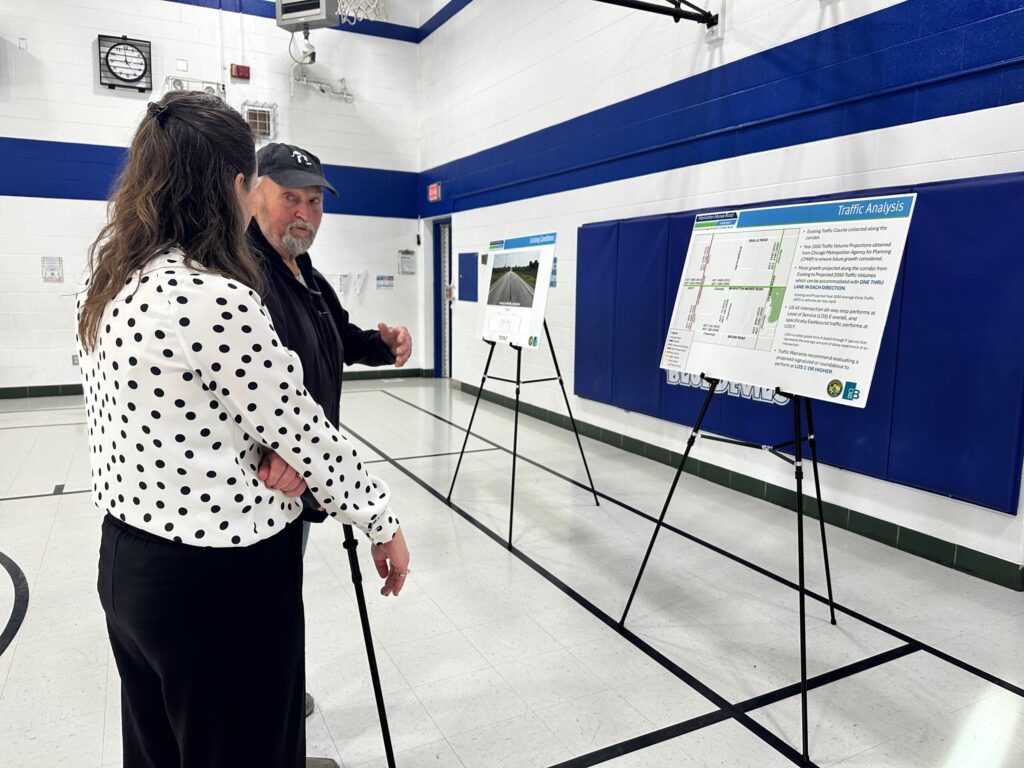
Will County DOT Hosts Open House on Manhattan-Monee Road Project
Answers wanted to ‘pathetic’ state procurement issues

Report paints dismal picture of California’s jobs market
Report: U.S. added $1.2 trillion to national debt in six months
Illinois House pushes through bill restricting ICE detention centers in state

Cheaper gas could take time amid tentative ceasefire

Trump says military remains in place as talks with Iran set to begin

Illinois Quick Hits: Ex-nonprofit exec sentenced for state, federal grant fraud
Crete-Monee School Board Unanimously Rejects $503,000 Tax Levy Abatement

Will County Prepares for Route 66 Centennial with $3.4 Million in Grant Projects
Lawmaker calls for department reform supporting Illinois families with disabled children