
DOT realizes road safety a concern with marijuana rescheduling
With the impending rescheduling of marijuana in the U.S., the transportation industry is searching for answers on whether it still will legally be able to test employees before sending them on the road or in the air.
Truck and school bus drivers, train engineers and pilots are all considered “safety-sensitive” transportation employees, and therefore subject to drug testing under U.S. Department of Transportation regulations.
But the DOT, which follows the U.S. Health and Human Services drug testing panel, only permits commercial transportation employers to test for Schedule I and II drugs under the Controlled Substances Act. Marijuana is currently classified as a Schedule I drug but President Donald Trump this month signed an executive order to reclassify it as a Schedule III controlled substance, despite many Republican lawmakers urging him not to.
The U.S. Drug Enforcement Agency describes Schedule I narcotics as those “with no currently accepted medical use and a high potential for abuse.” The DEA describers Schedule III substances as those “with a moderate to low potential for physical and psychological dependence.”
The concern, Brenna Lyles from the American Trucking Associations told The Center Square, is that once marijuana is reclassified as a Schedule III drug, HHS will reflect the change and employers might no longer be able to test their drivers for cannabis use.
“It’s not totally clear whether moving something from a Schedule I to a III eliminates that authority altogether, but generally it’s agreed upon based on the drug testing laws written in the Omnibus Transportation Employee Testing Act [of 1991],” Lyles, ATA’s senior director of safety policy, told The Center Square.
“HHS’s authority to issue tests and laboratories for these drugs lies in that regulatory regime naming Schedule I and Schedule II drugs specifically. So once a drug moves to that lower schedule, it becomes less clear what they can and can’t do.”
Lyles added that ATA is encouraged by DOT’s commitment to safety, referencing its recent news release that stated the agency “will continue to monitor the rescheduling process and update the transportation industry as appropriate.”
Delta-9, the form of THC present in marijuana, continues to be the most frequently detected drug among transportation industry workers subject to federal rules. Cannabinoids currently make up over 60% of all positives in the DOT’s Drug and Alcohol Clearinghouse database.
Because DOT specifically names marijuana in its own testing protocols, it is possible the current administration may interpret that to mean that the agency still has the authority to test. Yet even then, the DOT would no longer be able to rely on HHS’ testing regime, as it has done for decades, which would create a patchwork of drug testing protocols.
“At the end of the day, the piece that’s really critical is the basic technical and scientific certifications, labs, and guidance that HHS is uniquely qualified and positioned to continue issuing,” Lyles noted. “I think it would be disruptive if you’re relying on HHS for this whole panel of drug testing like cocaine and amphetamines, and then you have to return and complete a whole other testing protocol with DOT.”
Lyles added that while the current DOT seems attentive to road safety – it recently pulled 9,500 commercial truckers off the road for failing English language proficiency checks – that could change under a future administration. She would “absolutely” support making current transportation industry testing protocols for marijuana permanent.
“I think any type of clarity, whether that’s legislative or regulatory, to codify the testing requirements provides a lot of certainty for the future – some kind of safety-sensitive carve-out that specifically states that regardless of the schedule of marijuana, we will preserve this,” Lyles said.
“There are potentially some regulatory hurdles, just based on how that omnibus drug testing law was written, so I think there’s going to be things that need to happen,” she added. “That may end up being a rulemaking, and it may end up being a legislative act.”






Chance Showers And Thunderstorms
Latest News Stories
Village Partners with Library to Install 24/7 Pickup Lockers

Illinois quick hits: Bovino thanks police; fire assistance grants available
IL House Speaker: ‘not even close’ to school choice legislation

IL comptroller: Chicago mayor’s policies chase businesses away

Menards settles deceptive 11% rebate lawsuit for $4.25M with 10 states
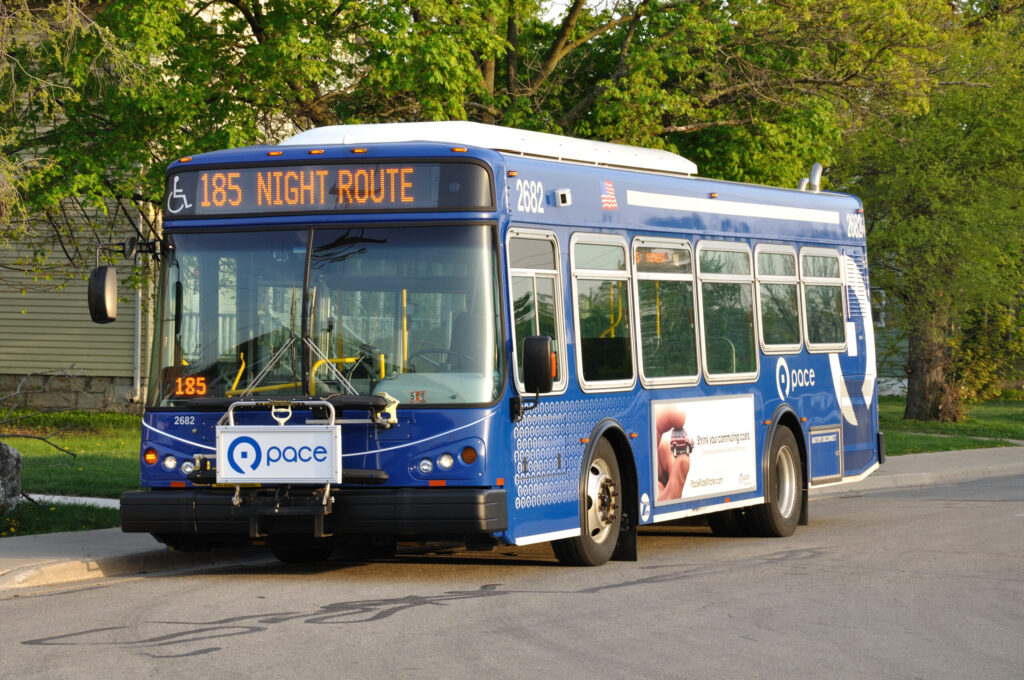
Pace Expands I-55 Service and Launches ‘VanGo’ in Joliet

Will County Executive Committee Rejects School Choice Advisory Referendum
Frankie’s Pizza Celebrated for 42 Years of Business in Monee
‘Welcome Move’: 815 Mulch-It Granted More Time to Relocate in Homer Glen

Meeting Summary and Briefs: Public Works & Transportation Committee for December 2, 2025
Land Use & Development Committee forwards Women’s Residential Recovery Center
Will County Board Members Question Fairness of New Transit Tax Structure