
Judge dismisses challenge to National Park Service cash policy
A judge again dismissed a legal challenge to the National Park Service’s no-cash policy at about 28 of the federal agency’s 433 parks.
U.S. District Judge Timothy Kelly said the plaintiff, Toby Stover, wasn’t actually hurt by the policy, so she didn’t have standing to sue. Stover attempted to pay cash at the Roosevelt-Vanderbilt National Historic Sites in Hyde Park, New York, but was turned away.
Stover’s attorney, Ray Flores, had asked the judge to toss the NPS’s cashless policy.
“The Court finds, again, that Stover has failed to plausibly allege that she suffered an injury,” the judge wrote, noting he dismissed an earlier version of the case last year.
The judge also said the NPS policy doesn’t prevent entry, but rather requires a different form of payment.
“Even if Stover had plausibly alleged that she planned to return to Hyde Park or any other similar NPS site, any injury flowing from the alleged NPS policy would not be sufficiently concrete to satisfy standing,” he wrote in the order. “That is so because Stover has not alleged that she cannot pay the entrance fee electronically. In fact, she readily admits that she ‘has the necessary means’ to do so. Thus, because the alleged NPS policy Stover challenges does not prevent her from visiting Hyde Park or any other similar NPS site, she has not alleged that it inflicts an injury in fact on her.”
Flores told The Center Square that the plaintiff will appeal to the D.C. Circuit Court of Appeals.
Kelly dismissed a similar complaint in February, but left an opening for plaintiffs to re-file an amended complaint.
NPS did not immediately respond to questions from The Center Square about the judge’s ruling. The Center Square also reached out to the Department of the Interior, which oversees NPS, for comment.
NPS previously said that it stopped accepting cash at some parks to better steward the funds.
“Reducing cash collections allows the National Park Service to be better stewards of the fees collected from visitors,” according to its website. “Cashless options reduce transaction times at busy entrance stations and decrease the risk of theft. Moving to a cashless system improves accountability and consistency, reduces chances of errors, and maximizes the funding available for critical projects and visitor services.”
The NPS website also notes alternatives.
“Each park that has completed the transition to cashless fee collection has an alternative option for visitors who are not able to pay with a credit or debit card. The specific arrangements vary by park, and park staff onsite will be able to assist,” according to NPS. “Most parks that have converted to cashless fee collection have had an overwhelmingly positive experience.”
In a 2023 news release, NPS explained why Death Valley National Park was going cashless. It said that Death Valley collected $22,000 in cash in 2022. Processing that cash cost the park $40,000, according to the release.
“Cash handling costs include an armored car contract to transport cash and park rangers’ time counting money and processing paperwork,” according to the release. “The transition to cashless payments will allow the NPS to redirect the $40,000 previously spent processing cash to directly benefit park visitors.”
According to NPS, of the more than 400 national parks in the National Park System, 108 charge an entrance fee.






Chance Showers And Thunderstorms
Latest News Stories

Crete-Monee Capitalizes on Kankakee Miscues, Cruises to 18-8 Run-Rule Victory
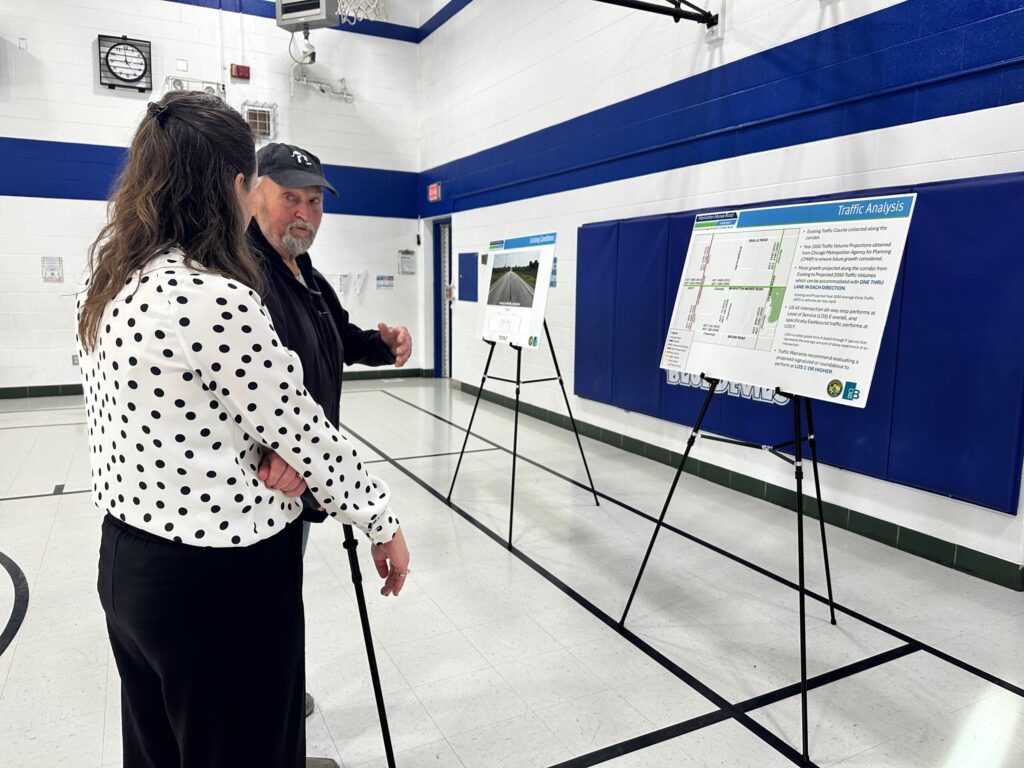
Will County DOT Hosts Open House on Manhattan-Monee Road Project

Answers wanted to ‘pathetic’ state procurement issues

Report paints dismal picture of California’s jobs market

Report: U.S. added $1.2 trillion to national debt in six months

Illinois House pushes through bill restricting ICE detention centers in state

Cheaper gas could take time amid tentative ceasefire

Trump says military remains in place as talks with Iran set to begin

Illinois Quick Hits: Ex-nonprofit exec sentenced for state, federal grant fraud

Crete-Monee School Board Unanimously Rejects $503,000 Tax Levy Abatement
Will County Prepares for Route 66 Centennial with $3.4 Million in Grant Projects

Lawmaker calls for department reform supporting Illinois families with disabled children