Will County Board Approves Controversial Recovery Retreat in Crete Township Amid Strong Resident Opposition
Article Summary: The Will County Planning and Zoning Commission approved a special use permit for a long-term residential recovery program on a 68-acre horse farm, despite vocal opposition from Crete Township officials and numerous residents who cited safety and property value concerns. Supporters argued the facility is a desperately needed, safe, and compatible use for the rural area.
Second Story Ranch Proposal Key Points:
-
The commission voted 4-2 to approve a special use permit for The Second Story Ranch, a recovery-centered residential and community healing retreat.
-
The program, located at 2400 Bemes Road, will house up to 15 men overcoming homelessness and addiction, integrating their recovery with work on the existing horse farm.
-
Dozens of residents from the adjacent Ridgefield subdivision and the Crete Township board formally objected, expressing fears about crime, a lack of security, and negative impacts on their community’s character.
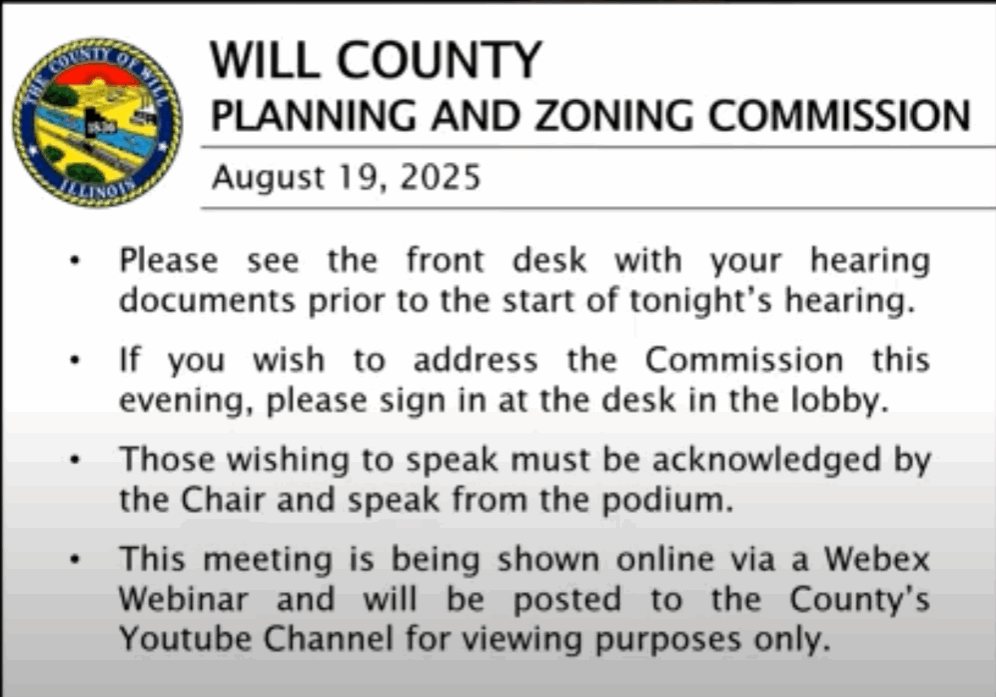
JOLIET, IL – After more than an hour of emotional testimony from concerned residents and impassioned supporters, the Will County Planning and Zoning Commission voted 4-2 on Tuesday to approve a special use permit for a men’s addiction recovery retreat on a 68-acre horse farm in unincorporated Crete Township.
The Second Story Foundation, a nonprofit organization, plans to establish “The 2nd Story Ranch” at 2400 Bemes Road, formerly the Double Dakota Ranch. The program is designed as a long-term residential and workforce development initiative for up to 15 men recovering from homelessness, addiction, and institutionalization. The model combines therapeutic work with horses and agricultural activities with structured recovery programming.
The proposal drew significant opposition from neighbors and township officials. Cheryl Albrecht, a Crete Township Trustee, stated the township board unanimously voted to recommend denial. “The board first and foremost must consider the safety and quality of life of all of our residents, and we believe that a group home of this type could pose a danger to the adjacent residential communities,” Albrecht said, reading from the township’s official statement.
This sentiment was echoed by numerous residents of the adjacent Ridgefield subdivision. Morris Robinson II, president of the community’s homeowners association, submitted a petition signed by 50 residents opposing the project. He shared a personal story about his brother, who is five years in recovery but still possesses a “street mentality.” “He was telling me, ‘Dude, if I was over there, I’d go over there and take whatever I wanted,'” Robinson said. “You guys leave your doors open. You leave your garages up. You’re just open.”
Other residents, like Alfred Ivy, a criminal defense attorney, expressed grave concerns based on professional experience. “I purposefully and intentionally moved to Ridgefield because I was tired of being robbed, taken advantage of, having my things stolen,” Ivy said. “There is no dream scenario…that I could come up with based on 23 years of legal experience…where I could support this.”
Supporters of the project countered that these fears are based on stigma, not facts. James O’Connor, executive director of The Second Story Foundation and a certified alcohol and drug counselor, argued the program is a public safety solution. “The concern they raised in that letter that our participants pose a safety threat is based on stigma and not facts,” O’Connor stated. “The men who will join our program are in recovery, working hard to build stable, productive lives. They are not a danger to this community.”
O’Connor and other supporters, including Ken Cowan, a board member of the foundation, pointed to a similar, successful 50-year-old program at The Center in Palos Park, which operates near high-value homes and a school without any criminal incidents.
Dr. Kathleen Burke, Will County’s director of substance use initiatives, spoke in strong support of the project, calling it an innovative and desperately needed resource. “Substance use is a medical disease. It’s not a way of thinking,” Dr. Burke explained. “If we don’t allow opportunities for people to recover, there will be no recovery and they will end up in jail.” She clarified that residents would have already completed a 28-day inpatient program and would be vetted before being accepted into what is effectively a third-stage recovery home focused on long-term stability and life skills.
The commission’s approval came with seven conditions, including compliance with all health department requirements, limiting the site to six total dwellings, and requiring any required state licenses to be kept up to date.





Rain Showers Likely then Mostly Cloudy
Latest News Stories

Legislative Committee: Lobbyists Report on Federal Shutdown and Legislative Outlook

Illinois proposal makes businesses financially liable for climate change

Illinois unemployment rate tops national average; state ends 2025 with fewer jobs

Dozens arrested during ongoing unrest in Minneapolis

Illinois Quick Hits: Iowa wants Illinois’ counties

Despite vast elderly population, Florida lags other states in stopping Medicaid fraud

County Authorizes Financial Study of Homer Glen Law Enforcement Contract

Will County Public Works Debates Future Bridge Needs as 159th Street Closure Looms

Everyday Economics: Cooling jobs, a cautious Fed, and a housing recovery that needs confidence

Fierce races to determine control of Congress

EXCLUSIVE: Superintendent group webinar details school response to ICE

11 of 37 Mexican nationals extradited to U.S. being prosecuted in Texas