Will County Updates Solid Waste Ordinance, Increases Fines and Reporting to Landfill Committee
Article Summary: The Will County Ad-Hoc Ordinance Review Committee advanced an updated solid waste ordinance that doubles the maximum fine for violations and requires the county auditor’s annual report to be shared with the Landfill Committee. The changes, which now head to the Executive Committee, also remove outdated provisions and align fee language with current county practices.
Will County Ordinance Review Key Points:
-
The maximum fine for violations of the solid waste ordinance will increase from $500 to $1,000.
-
The annual audit of the Solid Waste Management Fund will be forwarded to the Landfill Committee for review within 30 days of its completion.
-
Outdated, time-sensitive provisions regarding exemptions and a recycling grant program were repealed from the code.
-
Fee structures and reporting requirements were updated to reflect current, contractually obligated rates and procedures.
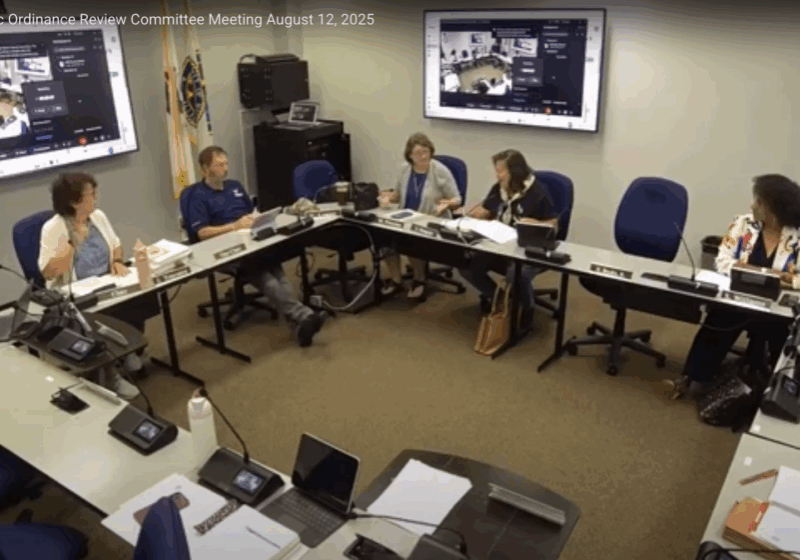
JOLIET, IL – Will County is updating its solid waste disposal regulations for the first time in years, with key changes aimed at increasing penalties and improving oversight by the county’s Landfill Committee. The Ad-Hoc Ordinance Review Committee voted Tuesday to approve a series of amendments to Chapter 50 of the county code, which governs landfill operations, fees, and reporting.
The most significant changes include doubling the maximum fine for violations from $500 to $1,000, a move Assistant State’s Attorney Philip Mock noted was long overdue. “It’s been this way since 1972 or so,” Mock told the committee. “I think it’s long since time to raise the fee.”
In a move to enhance oversight, the committee also amended the ordinance to mandate that the county auditor’s annual audit of the Solid Waste Management Fund be forwarded to the Landfill Committee within 30 days of its completion. The discussion was prompted by Member Mica Freeman, who questioned whether the Landfill Committee sees the monthly or quarterly reports submitted by waste haulers.
“Shouldn’t the Landfill Committee also be getting these reports? Because we never see them,” Freeman said.
While members decided against receiving individual hauler reports, they agreed that the annual audit summary was critical for the committee’s work. “I thought they just wanted the audit report, the annual audit,” Member Sherry Newquist clarified, leading to the consensus to formally add the requirement to the ordinance.
Mock, who presented the changes on behalf of the State’s Attorney’s office, explained that most of the revisions were housekeeping measures. Several sections, including those related to a former recycling grant program and certain time-sensitive fee exemptions, were repealed because their effective periods had long since passed.
The ordinance also updates fee language to reflect rates currently in place through the county’s contract with the landfill operator. This sparked a debate among committee members about the structure of the fees. Member Freeman questioned why the fees were not proportional to the amount of waste.
“If more than 100,000 cubic yards but not more than 150,000 cubic yards, you’re going to pay $33,350. You cut that in half. Now you only have to pay $15,500. Well, that’s not half of 33,000,” Freeman observed.
Mock explained the tiered fee structure was part of a negotiated contract. Member Daniel Butler questioned the logic, asking, “I don’t understand why they can’t just make it proportional to the weight.”
Chairperson Jacqueline Traynere noted that while the current ordinance reflects the existing contract, those concerns could be addressed in future contract negotiations.
The amended ordinance passed with Member Butler voting against it and will next be considered by the Will County Executive Committee.




Sunny
Latest News Stories
NIH plots investments in women’s health
Pritzker: ‘God was looking out for people’ in storm-damaged Kankakee County

Illinois Quick Hits: Correctional officer charged with sexual misconduct

24 AGs question funding of orgs refusing to remove climate agenda from judges manuals

Costco faces lawsuit as consumers seek refunds from invalid tariffs

Insurer won’t back Gori defense vs asbestos lawsuit fraud claims

With teachers union support, committee approves charter school mandates

Allstate can’t delete class action over alleged secret app tracking

Chicago voters view housing affordability as bigger issue than crime

New Illinois gun bill aims at glock switches; critics say it misses the real problem

Illinois quick hits: Cook County spends nearly $20 million on food, housing services; Chicago Teachers Union tells teachers, students to skip school; Russell Dickerson to play Du Quoin State Fair

Will County Officials Warn of Zoom Court Scam Targeting Defendants for Fraudulent Dismissal Fees